
Why Japandi interiors suit the way we actually live now
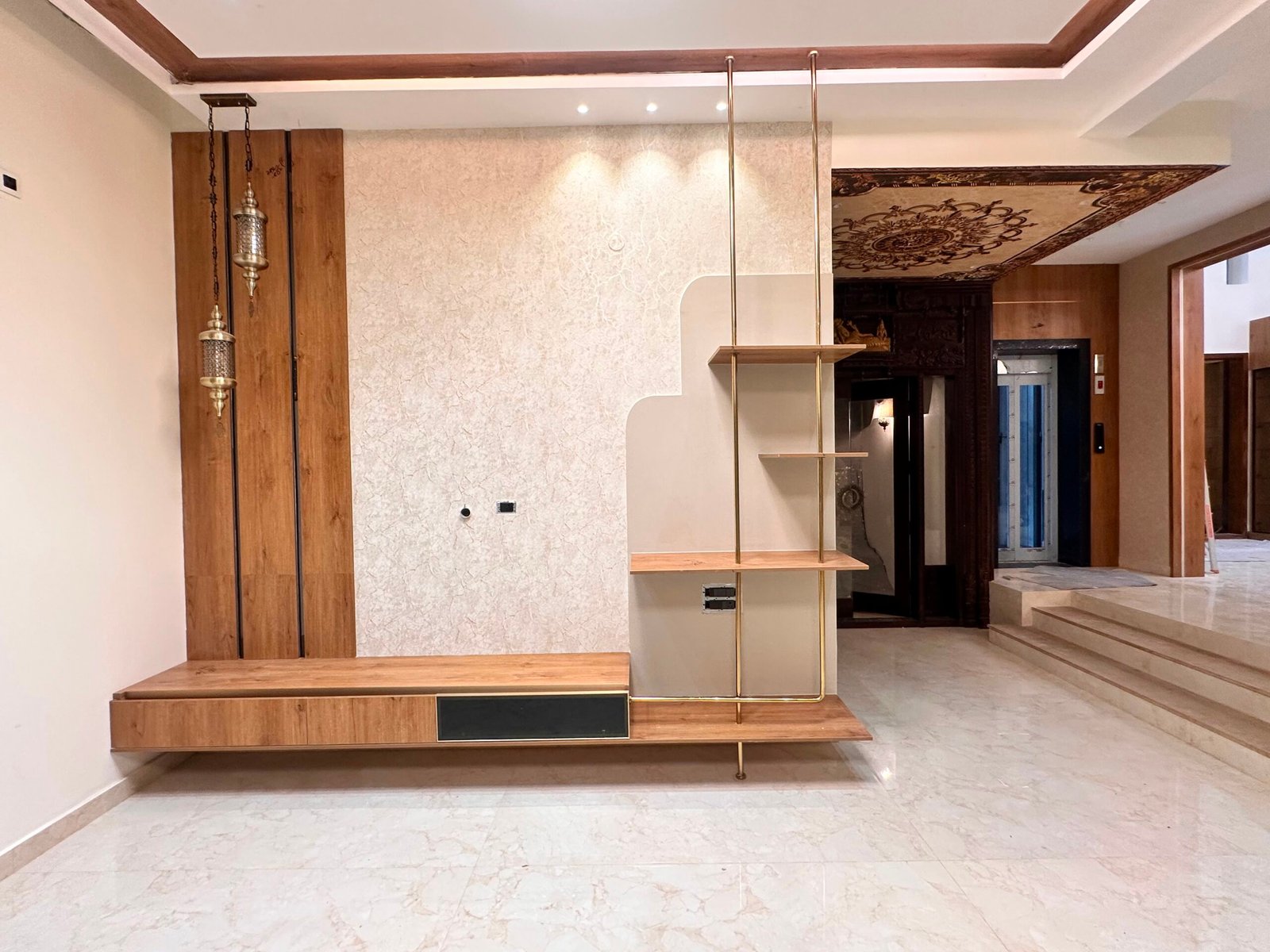
Step into a freshly handed-over 3BHK in Bangalore and the story is often the same: a feature wall behind the TV, a false ceiling with eight kinds of lights, a sofa that mixes three textures and a rug that matches none of them. It looks finished. It does not feel calm.
Japandi interiors are the quiet answer to that. The style blends Japanese restraint with Scandinavian warmth, and it asks one question of every object in the room: does this earn its place? You do not need a big budget or an empty house to try it. You need a clear idea of what the style is made of, which is exactly what this beginner’s guide covers.
By the end you will know the five principles behind Japandi, how to build a colour palette that works in Indian light, which materials survive Bangalore’s monsoon, and how to start in one room without redoing the whole home.
What is Japandi interior design, really?
Japandi is a hybrid of two design traditions that share a surprising amount of DNA. Japanese interiors bring wabi-sabi, the appreciation of things that are imperfect, handmade and ageing gracefully. Scandinavian interiors bring hygge, the cosy, lived-in comfort built for long, dark winters. Both reject clutter and both put natural materials first.
Where they differ is what makes Japandi interesting. Japanese rooms lean dark, low and spare. Scandinavian rooms lean pale, bright and soft. Japandi sits in the middle: lighter than a traditional Japanese room, but more disciplined than a typical Scandinavian one.
The five principles of Japandi style
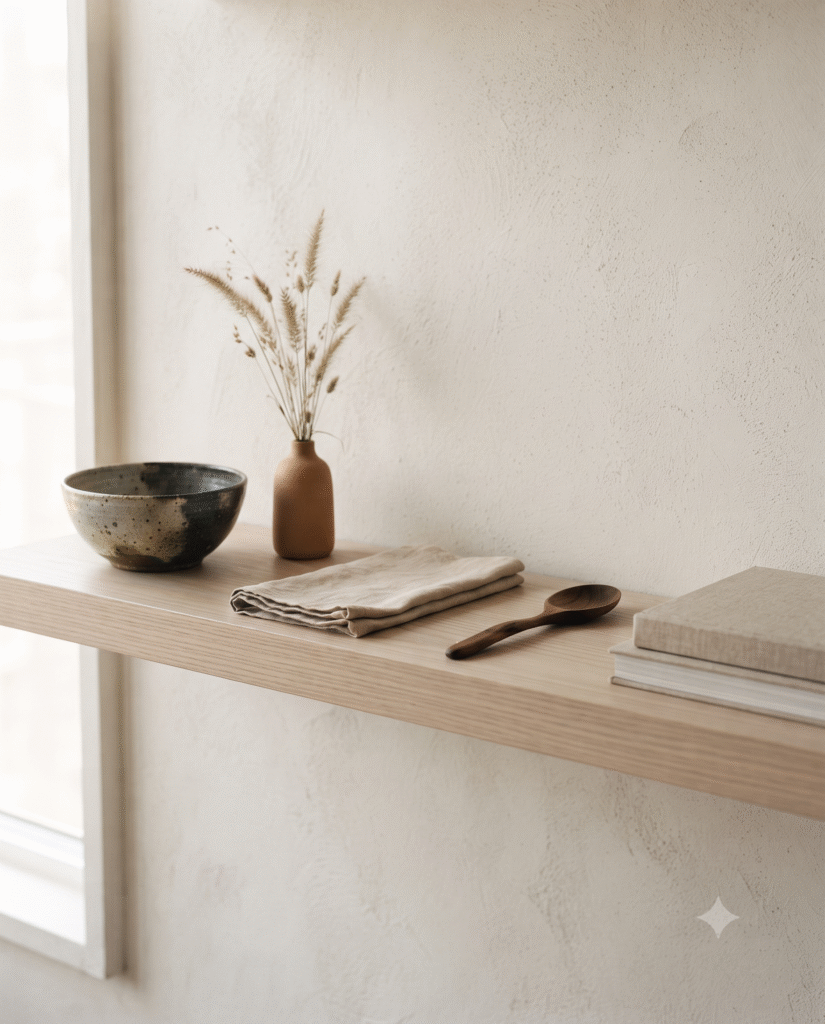
Every good Japandi room, whatever its size, follows the same five rules. Learn these and you can judge any product or layout yourself.
- Fewer, better things. Buy one solid dining table instead of a table plus a console plus a display unit. The Japanese idea of ma (meaningful empty space) says the gap between objects matters as much as the objects.
- Natural materials only where you touch. Wood, cane, linen, cotton, clay and stone. Anything your hand or body contacts daily should be real; laminates and plastics are kept out of sight.
- Muted, earthy colour. Think soil, bark, rice paper and slate, not bright primaries.
- Handmade over mass-produced. A slightly uneven pot beats a perfect factory one. This is wabi-sabi at work.
- Function first, then beauty. Everything is either useful or deeply liked. Ideally both.
The Japandi colour palette: a simple 60-30-10 formula
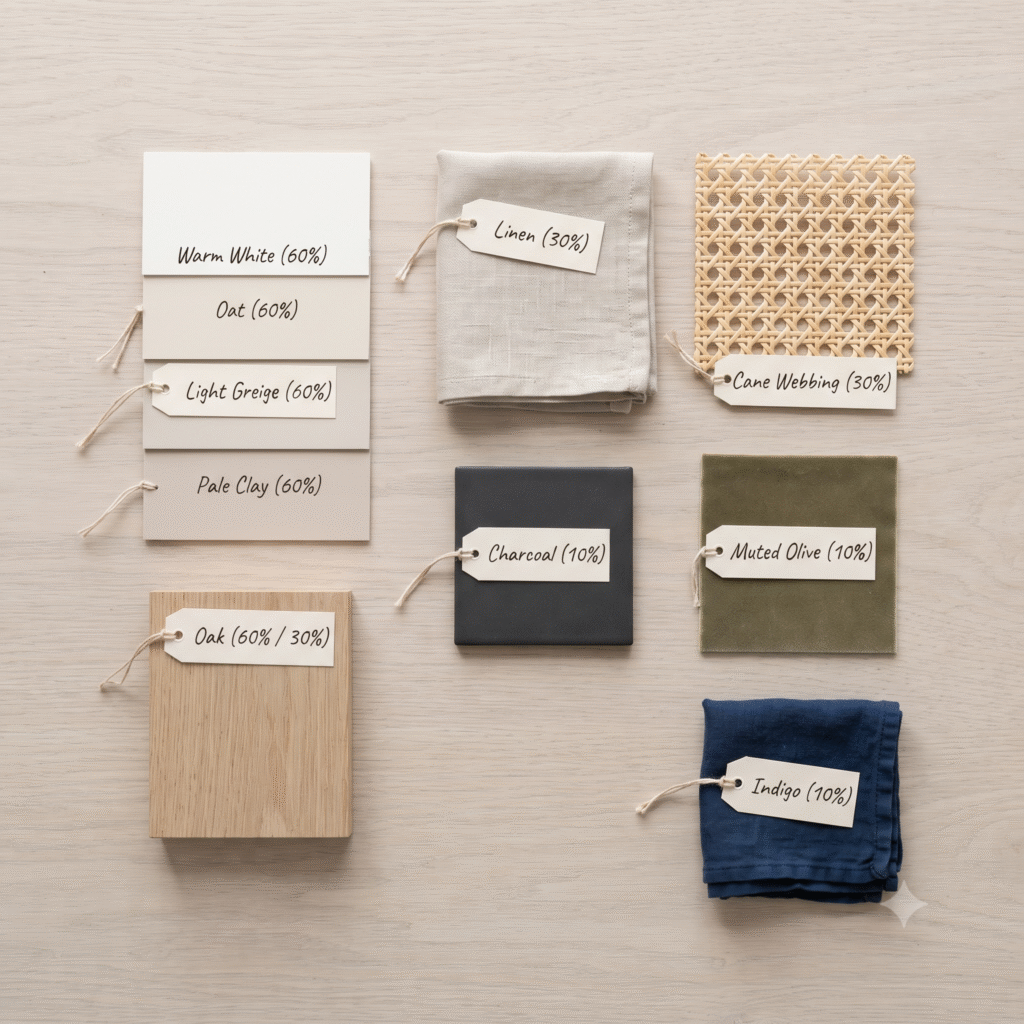
The easiest way to get the Japandi colour palette right is to split the room into three tiers. This keeps you from the beginner mistake of making everything beige.
| Share of the room | Role | Colours to use |
|---|---|---|
| 60% | Base: walls, ceiling, large rugs | Warm white, oat, light greige, pale clay |
| 30% | Body: furniture, curtains, wood | Natural oak, ash, teak, linen, cane |
| 10% | Accent: one or two small moments | Charcoal, deep olive, muted terracotta, indigo, black iron |
The 10% is where Japanese influence shows up. A single charcoal lamp base, a black metal curtain rod or an indigo cushion adds the contrast that stops the room looking flat. Skip bright white, which looks harsh in strong Indian daylight; a warm white with a faint yellow undertone photographs and lives far better.
Materials and textures: where Japandi gets its warmth
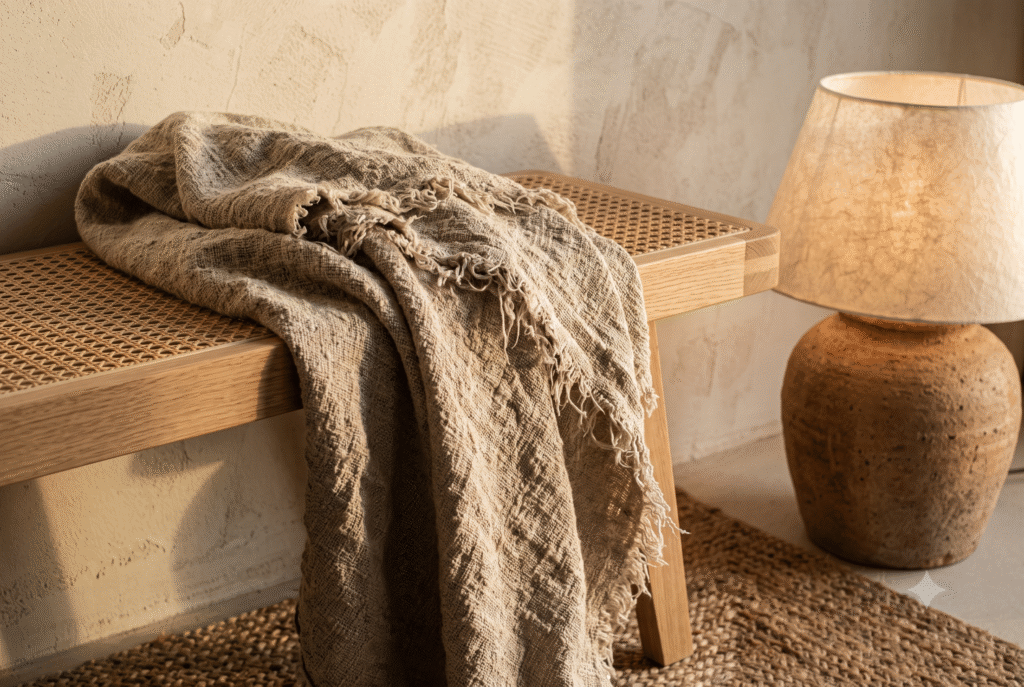
A Japandi room with the right colours but the wrong materials still looks like a showroom. The warmth comes from texture, so layer three or four natural ones and keep each one honest.
- Wood: light oak or ash for the Scandinavian side, teak or walnut for the Japanese side. Keep the grain visible with a matte or oil finish, never a high-gloss PU shine.
- Cane and rattan: ideal for chair backs, wardrobe shutters and pendant shades. It also lets air through, which suits humid cities.
- Linen and cotton: unlined sheer curtains, slubby cushion covers, a washed-cotton bedspread.
- Clay and ceramics: handmade planters, tableware and lamp bases with visible glaze variation.
- Stone and plaster: Kota stone or honed grey stone underfoot, lime plaster or microcement on walls for a soft, slightly uneven surface.
- Paper and bamboo: rice-paper style lampshades, bamboo blinds or a woven jute rug.
Japandi furniture: low, simple and built to last
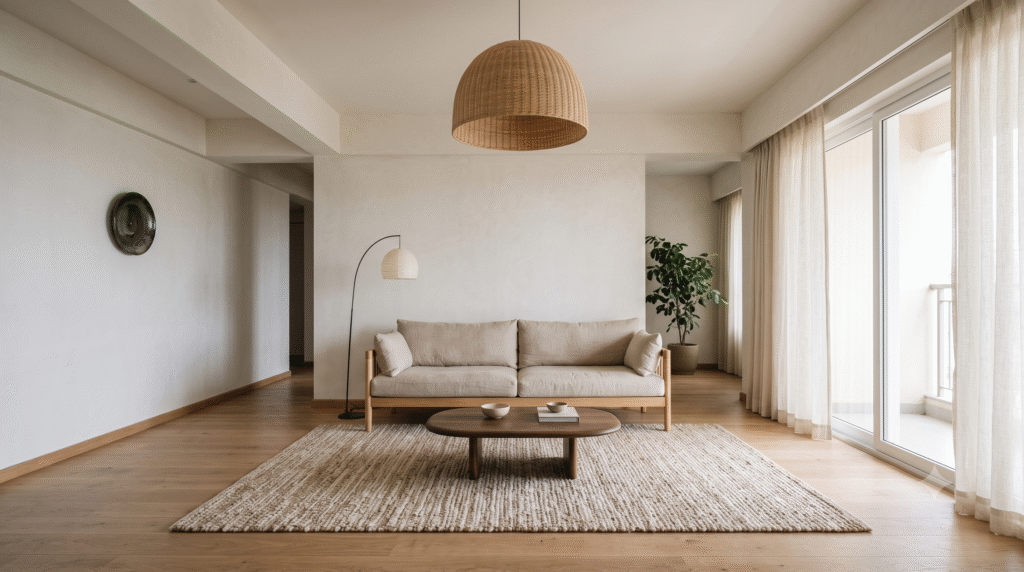
Japandi furniture has a recognisable silhouette. It sits low to the ground, has clean lines with a gentle curve or two, and shows how it was made. Exposed joinery, rounded edges and slim tapered legs are the details to look for.
Three rules help when you are choosing pieces:
- Keep the visual height low. A sofa with a back at about 70 cm, a platform bed and a dining table with slim legs make the ceiling feel higher.
- Leave floor visible. If you can see the floor under the sofa, bed and console, the room breathes. Heavy box-storage beds are the opposite effect.
- Group into zones, not walls. Instead of pushing every piece against the wall, float a sofa and let a rug define the seating area.
Lighting: soften the daylight, warm the evenings
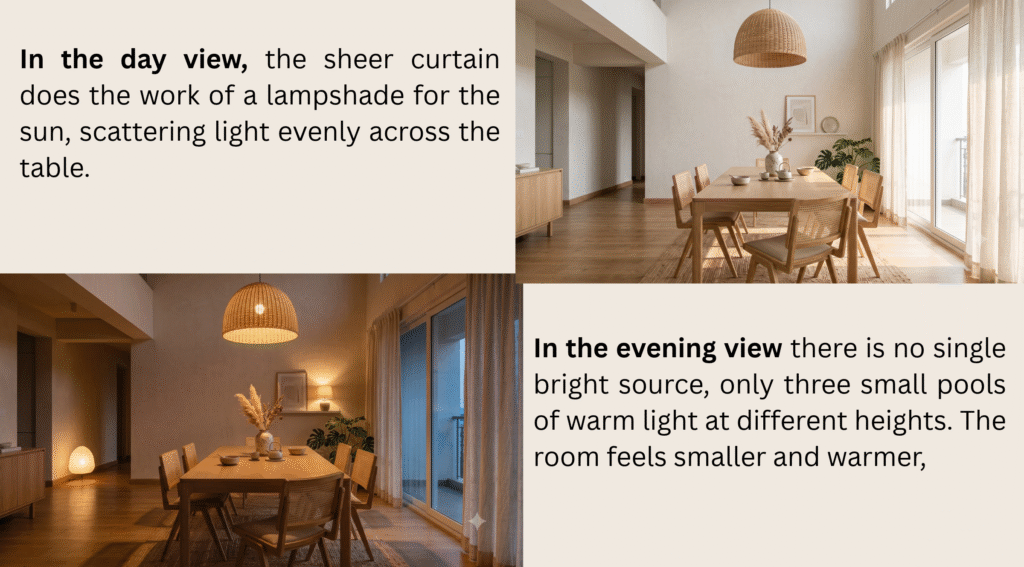
Lighting is where many Indian homes quietly undo a Japandi look. Rows of cool-white recessed spotlights flatten textures and make wood look grey. Japandi lighting does the opposite: it is layered, low and warm.
- Daytime: swap heavy lined curtains for sheers or linen, so strong sun is diffused instead of blocked. Bamboo or cane blinds work well on west-facing balconies.
- Evening: use 2700K warm-white bulbs only. Mix one overhead paper or woven pendant with a floor lamp and a table lamp, each at a different height.
- Fewer, softer sources: if your false ceiling already has twelve spotlights, put them on separate dimmable circuits so you can switch most of them off.
Japandi room by room: bedroom, kitchen and entryway
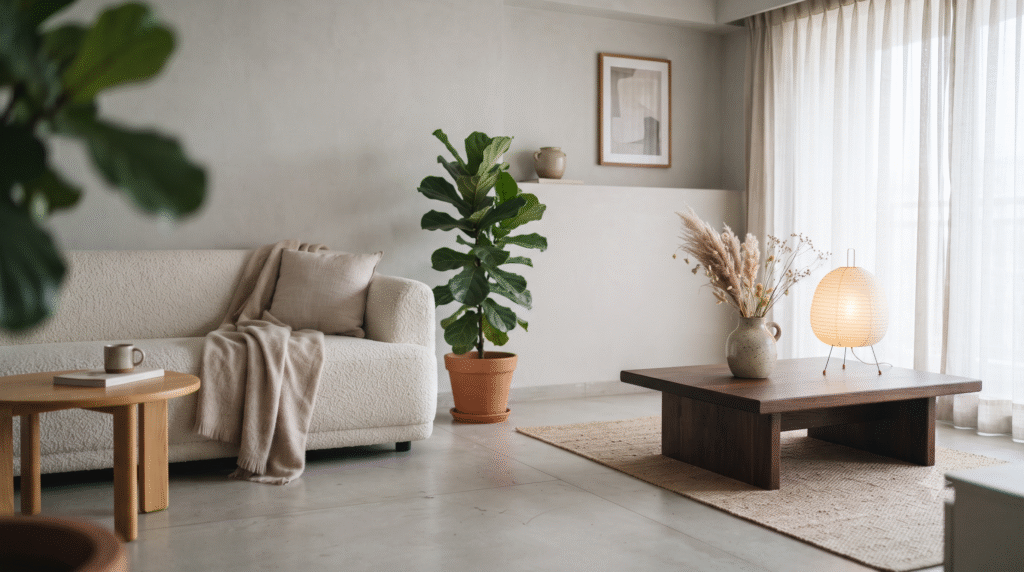
You have already seen the living room. Here is how the same ideas translate to three other spaces.
The Japandi bedroom
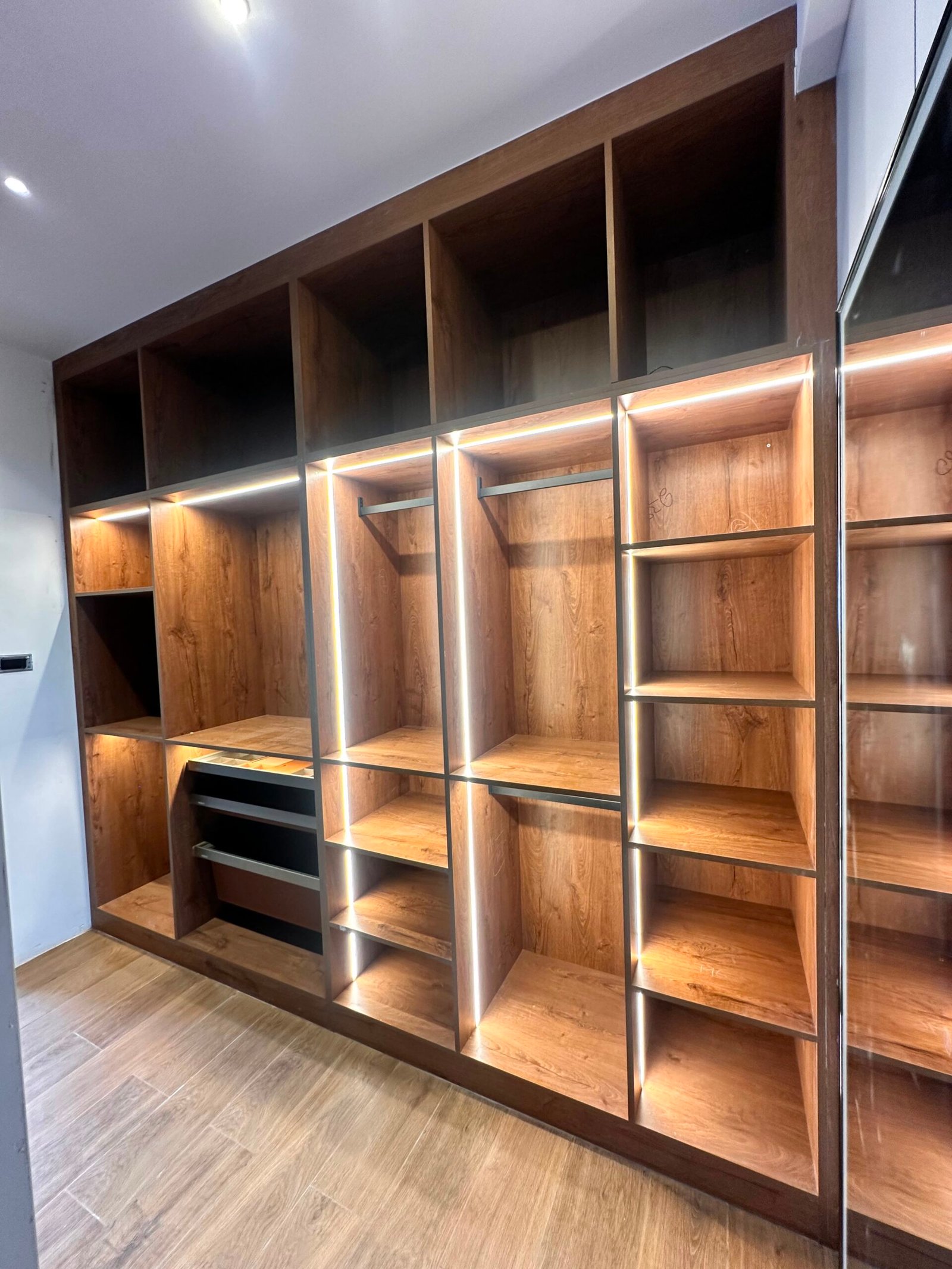
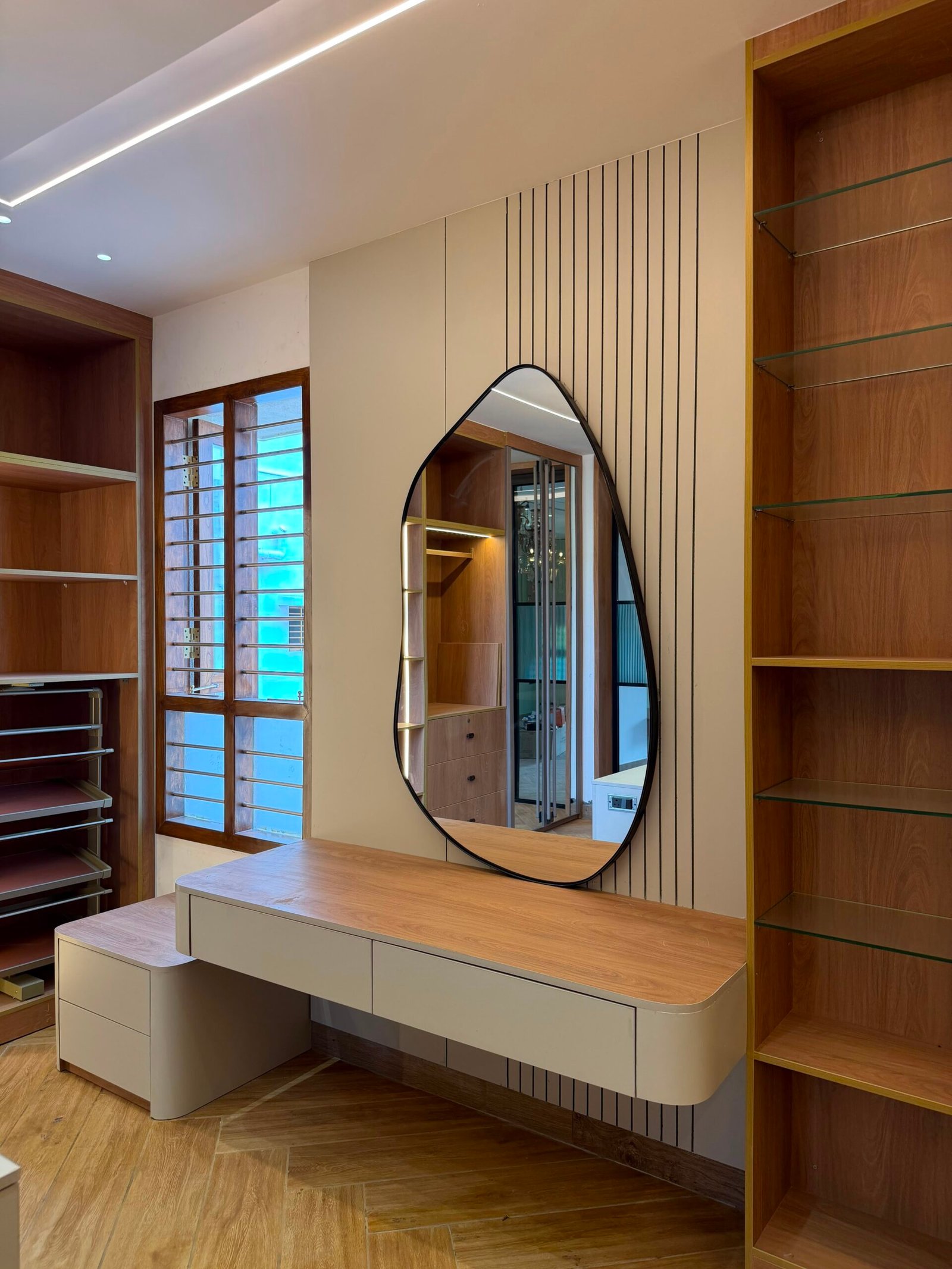
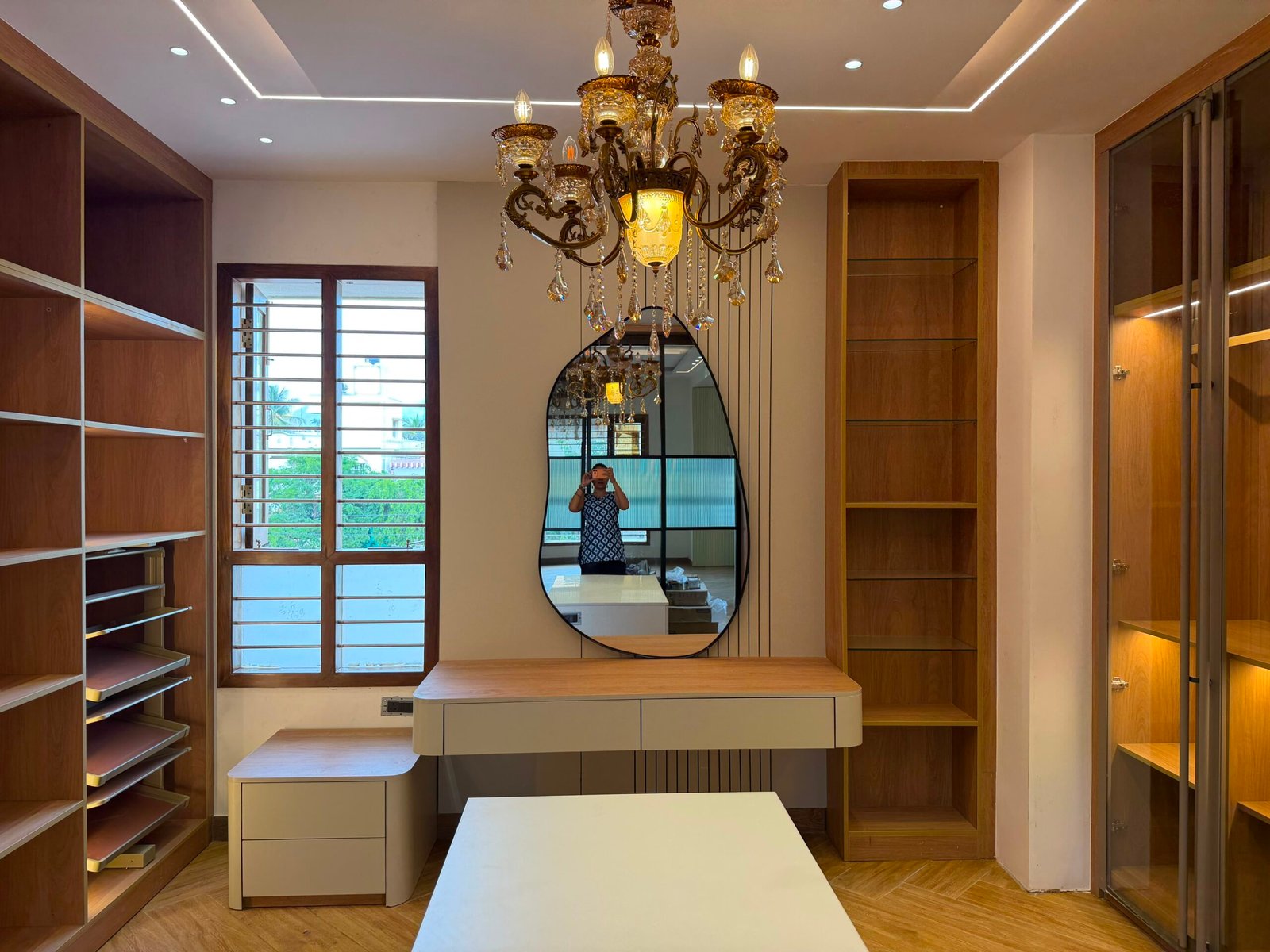
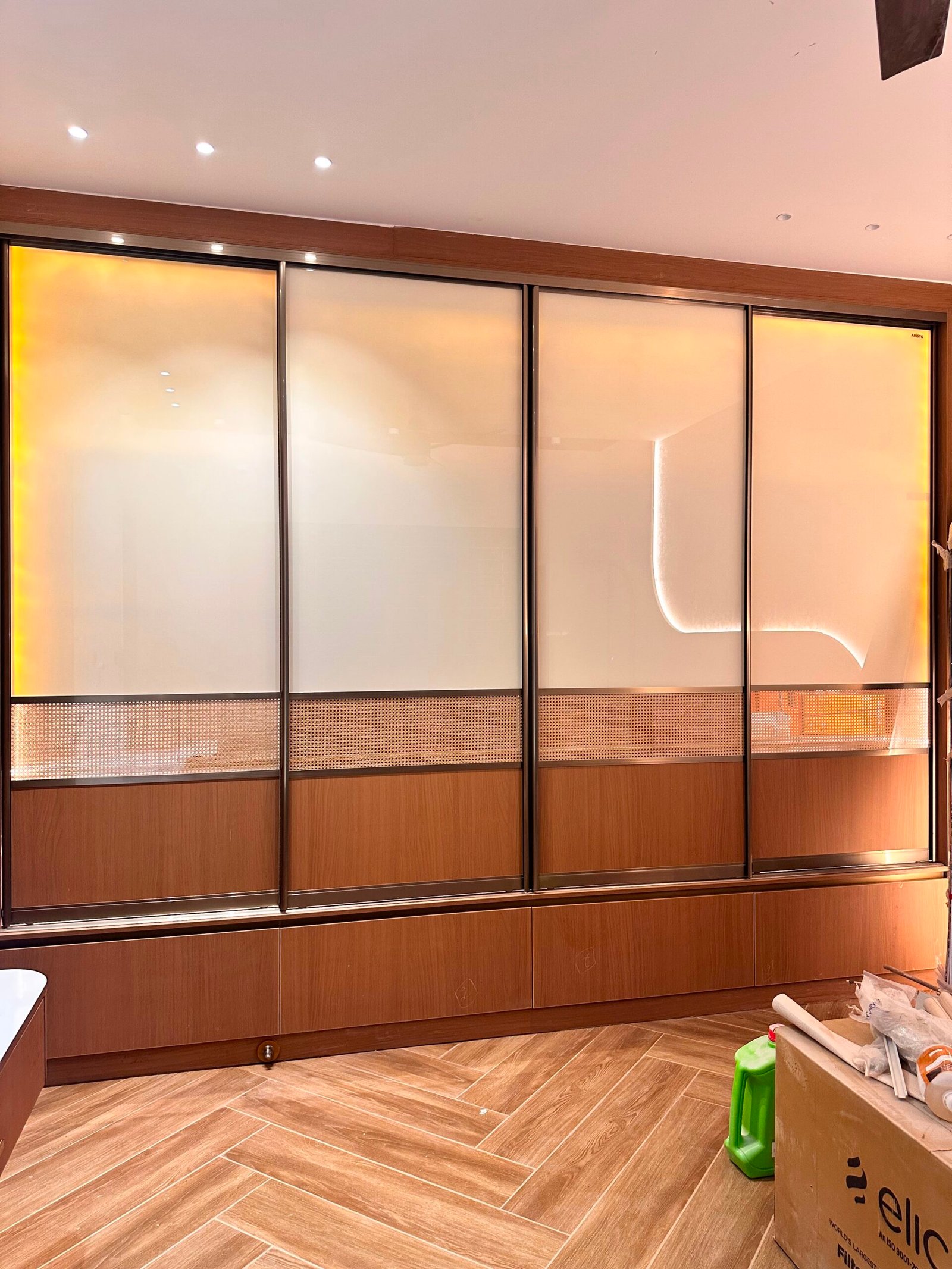
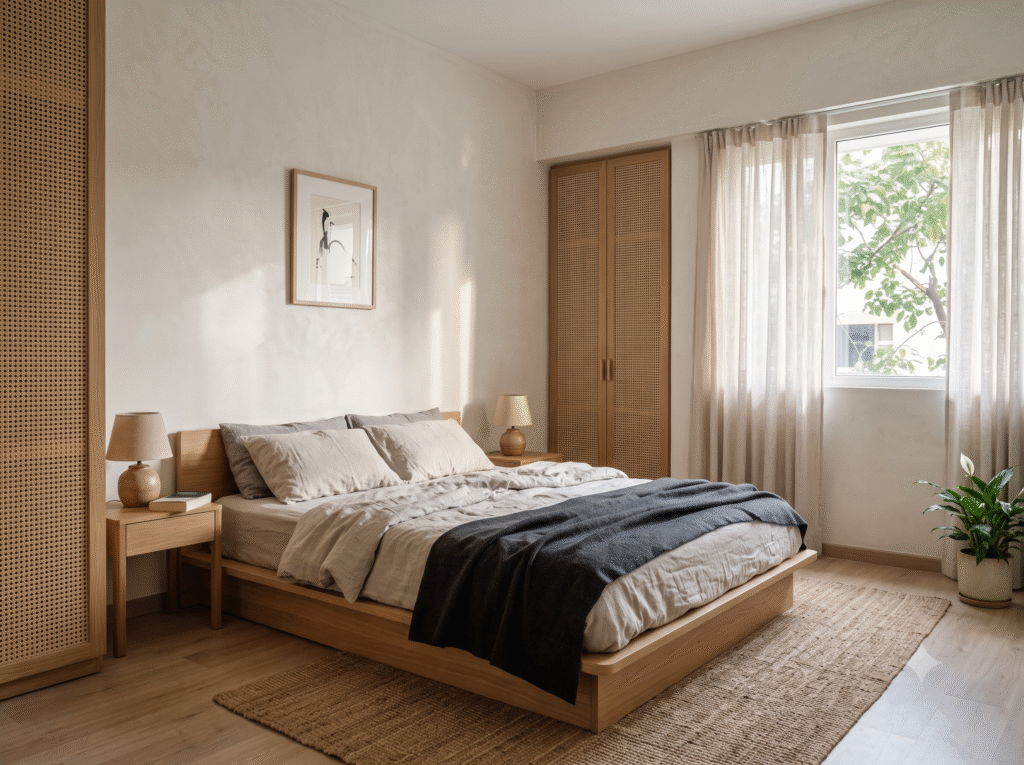
The bedroom is the easiest place to start, because it asks for so little. A low platform bed in oak or ash, linen bedding in two tones, one bedside lamp each and nothing on the floor except a rug. Keep the wardrobe shutters plain or cane, and hide the clutter inside them.
The Japandi kitchen
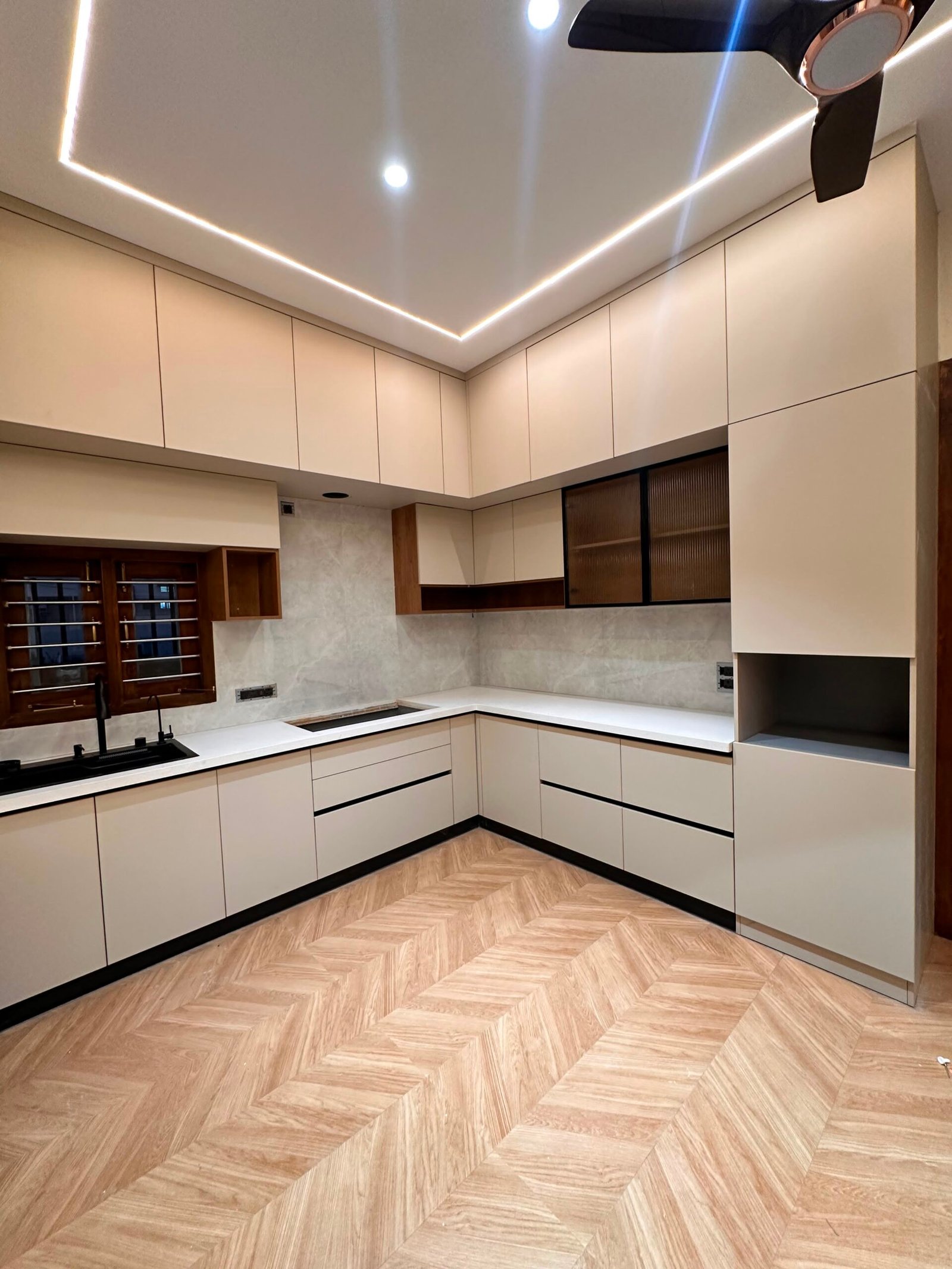
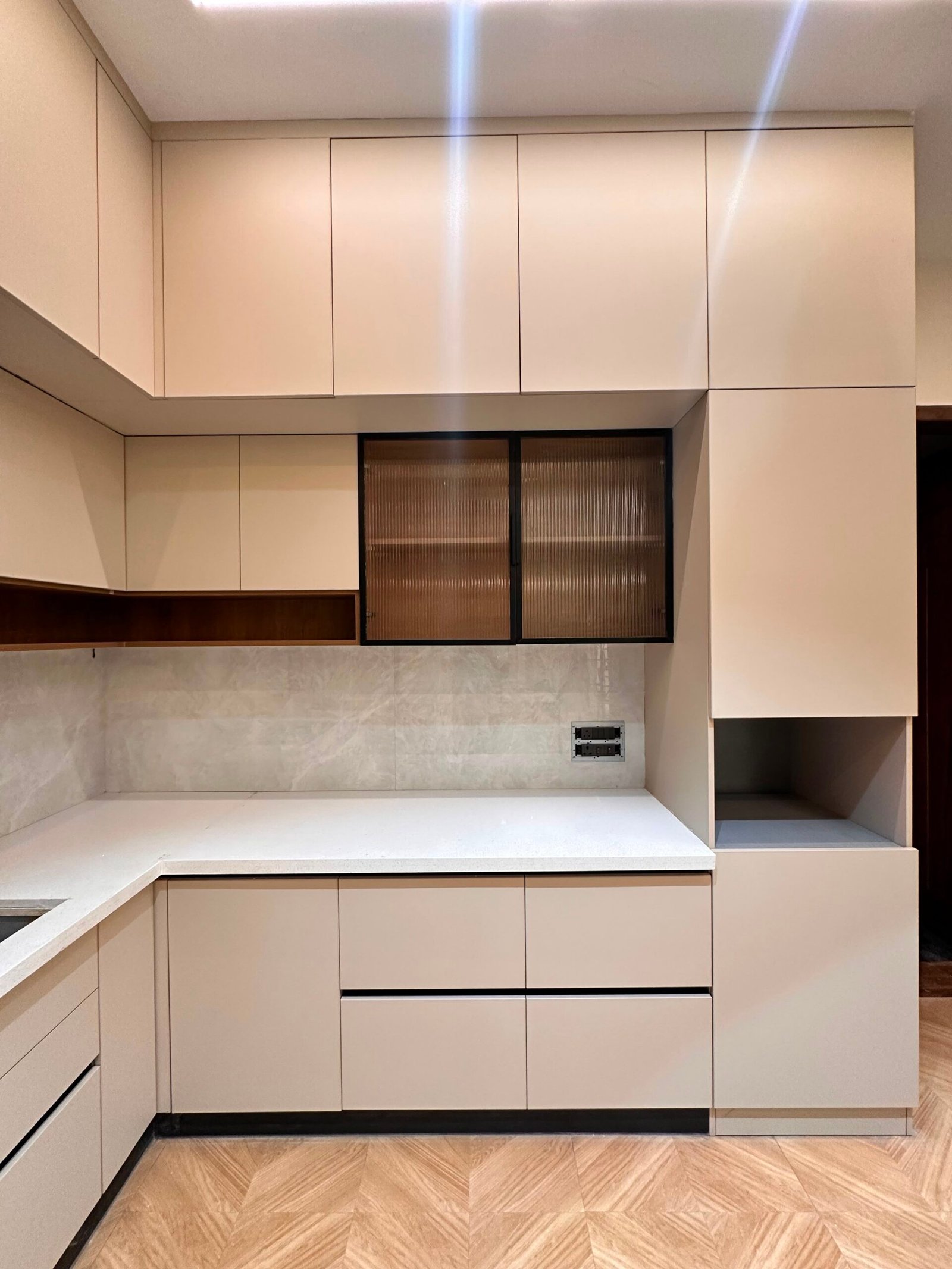
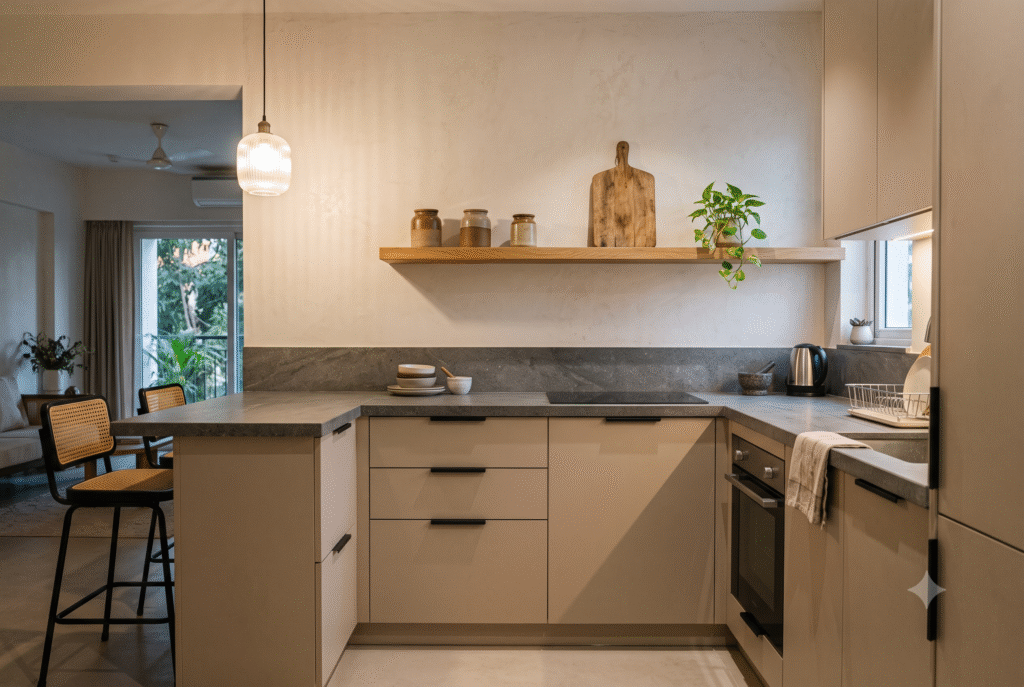
In a kitchen, Japandi means flat-front cabinets in a matte finish, a single wood element such as an open shelf or a breakfast counter, and a deliberately small set of countertop objects. Handleless shutters or slim black pulls keep lines clean. Hide the mixer, rice cooker and oil bottles inside; leave out only what you use every day.
The entryway
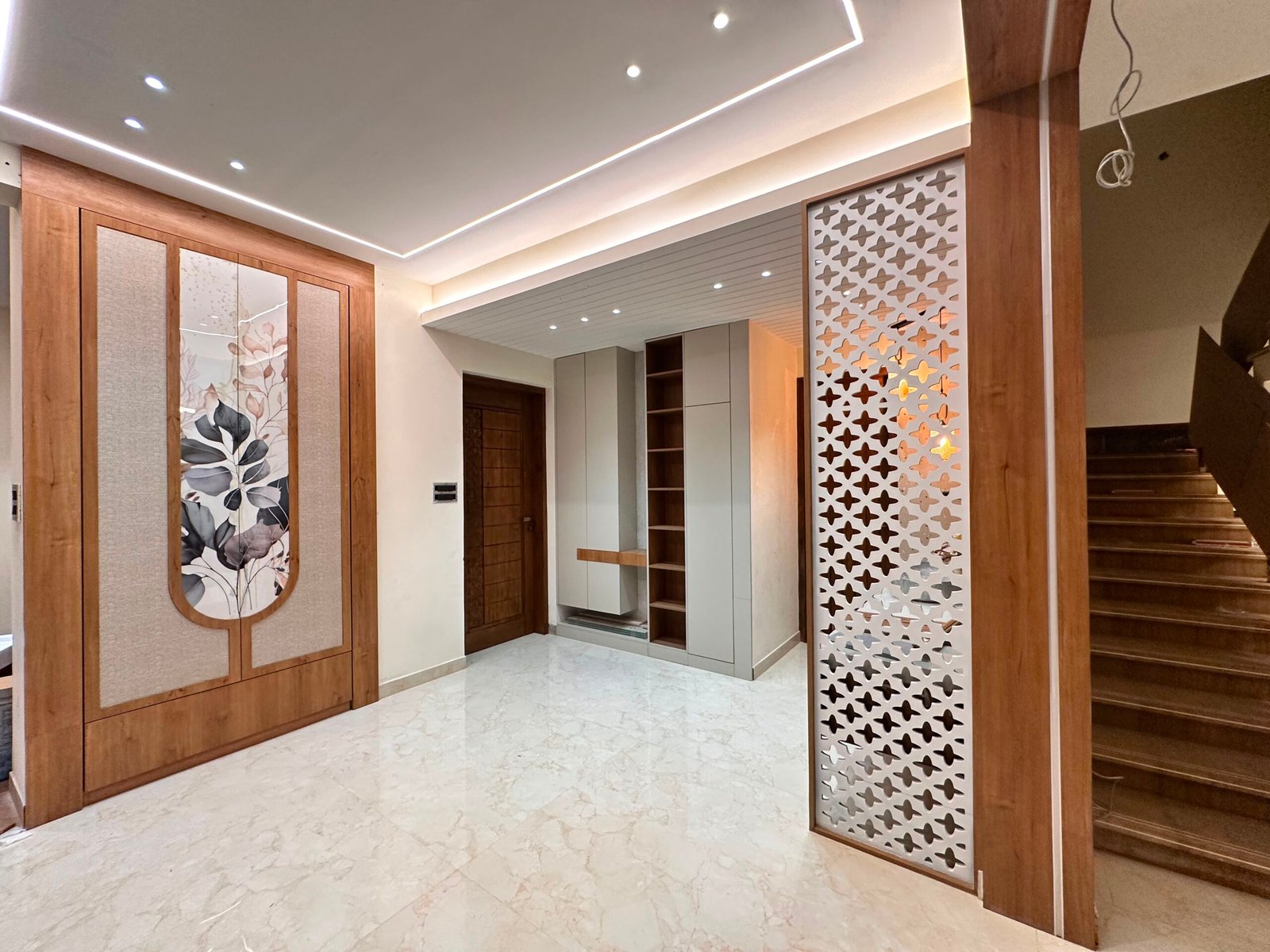
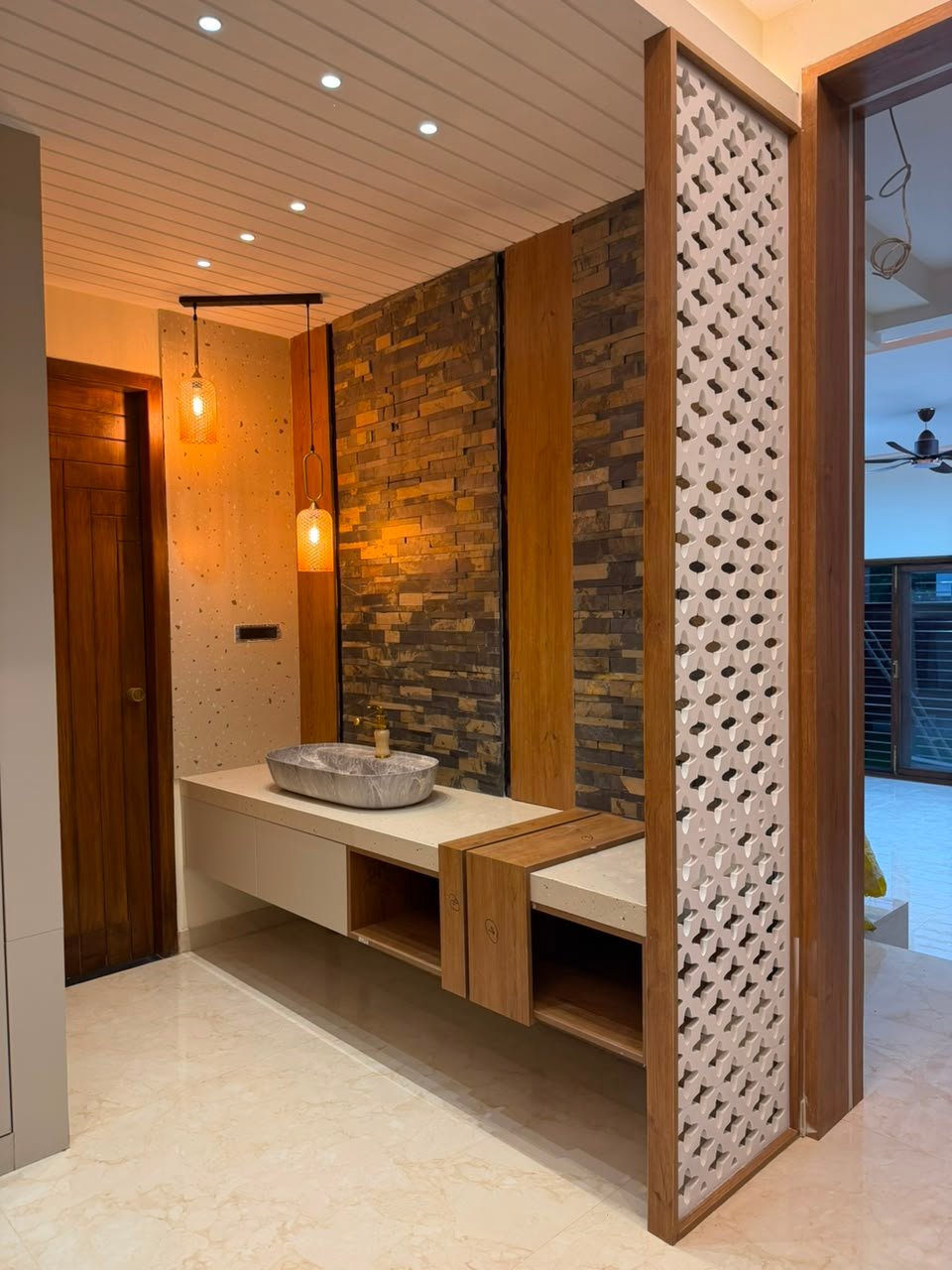
A shoe rack that doubles as a low bench, a single wall hook rail in wood, a small mirror and a ceramic bowl for keys is enough. It sets the tone for the whole home in under one square metre.
Making Japandi work in an Indian home
Most Japandi guides are written for cold, quiet, mostly empty Nordic homes. An Indian home has monsoon humidity, dust, a puja corner, guests who drop in, and a kitchen that does real cooking. The style works here, but it needs a few local adjustments.
| Challenge in Indian homes | Japandi-friendly fix |
|---|---|
| Humidity and monsoon damp | Choose teak, treated oak or engineered wood with a moisture barrier. Avoid raw MDF in kitchens and balconies. |
| Dust and heavy cooking | Closed storage, matte easy-wipe cabinet finishes and washable cotton or linen covers. |
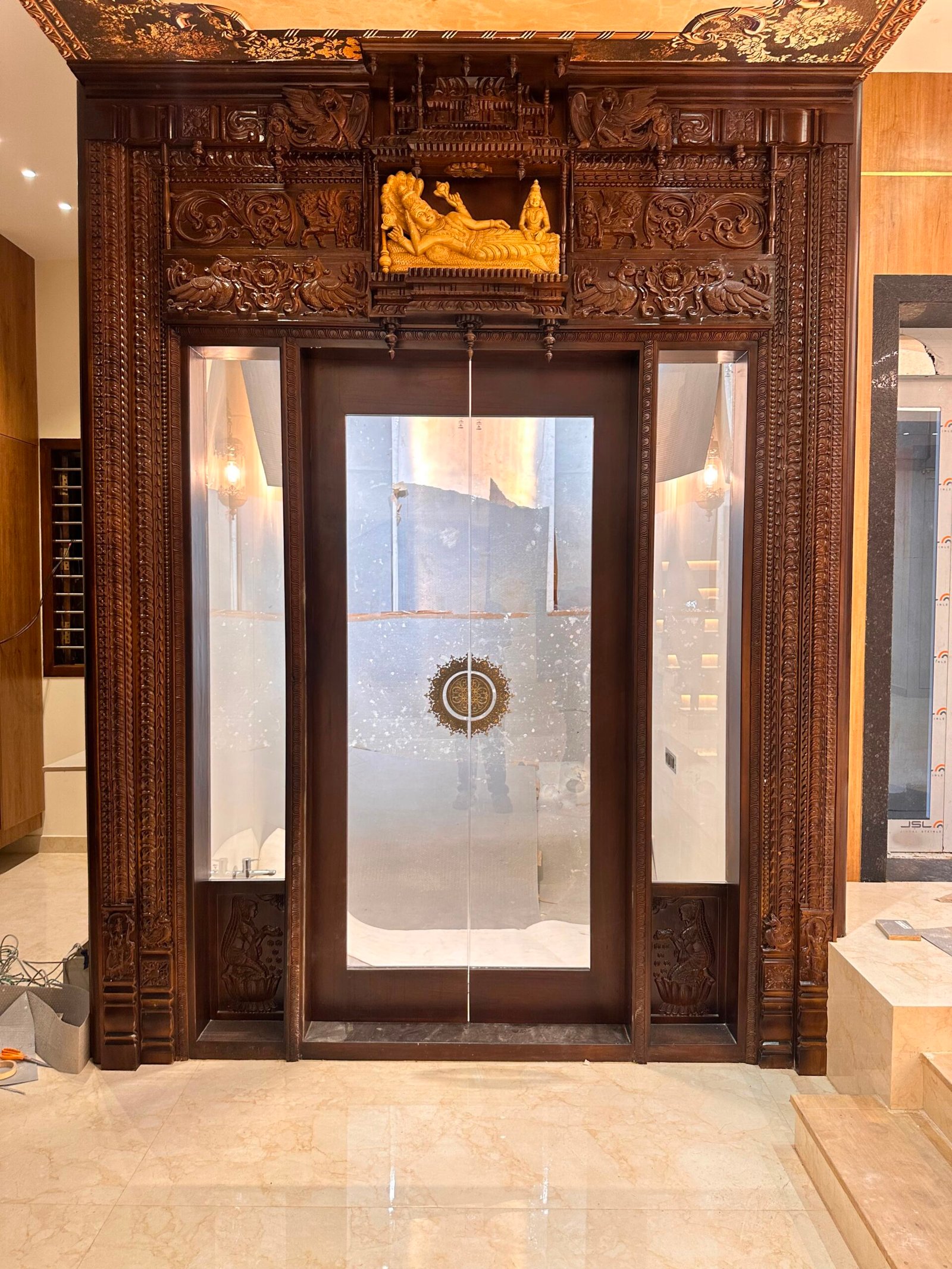
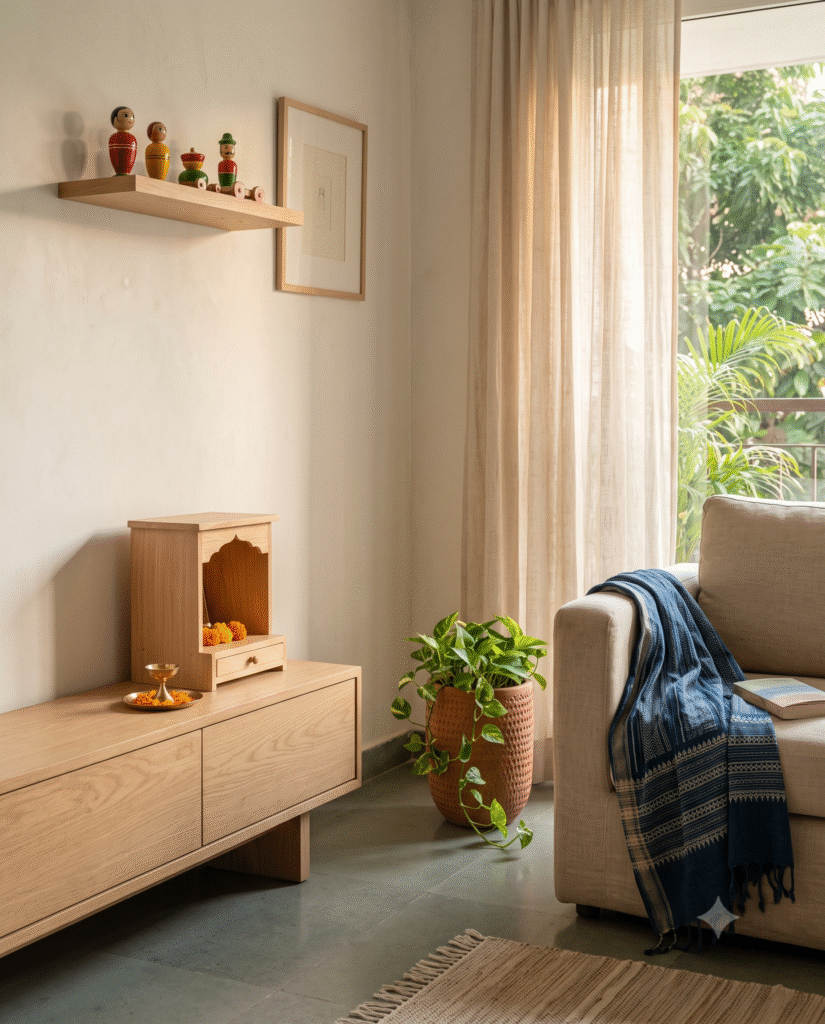
| A puja corner or mandir | Treat it as a feature, not a clash. A simple wooden or stone mandir with a brass diya fits the style well. |
| Large families and many belongings | Build full-height closed storage so the visible surfaces stay clear. |
| Local craft | Mix in Channapatna wooden objects, Bidri or brass pieces, handloom cotton and terracotta. |
Five beginner mistakes that make Japandi look like a showroom
- Going all beige. Without the 10% dark accent, the room reads flat. Add one charcoal or olive element in every room.
- Confusing minimal with empty. Japandi is warm. If the room feels cold, add texture: a wool throw, a jute rug, a clay lamp.
- Buying a full set. A matching sofa, table and TV unit from one catalogue loses the collected, handmade feeling. Mix at least two wood tones and one handmade piece.
- Faking the wood. Cheap laminates with a printed grain repeat their pattern and look flat in daylight. Use veneer or solid wood where you touch, and keep laminates where you do not.
- Overdoing the Japanese props. Skip the fake bonsai, the Buddha head and the paper umbrella. Japandi is about restraint and material quality, not Japanese souvenirs.
How to start your Japandi home in five steps
You do not have to renovate. A full Japandi home is a series of small edits, and the first three cost almost nothing.
- Declutter one room first. Pick the bedroom or living room and remove roughly a third of what is visible. Store, donate or sell it.
- Fix the palette. Choose your 60-30-10 colours and write them down before you buy anything.
- Change the lighting. Replace cool-white bulbs with 2700K warm-white ones and swap one heavy curtain for a sheer.
- Upgrade one anchor piece. A good solid-wood dining table, bed or sofa matters more than ten small decor items.
- Add handmade accents last. Ceramics, a woven pendant, a handloom throw. Buy them slowly, one at a time.
Bringing Japandi interiors home with Infrabob
Japandi looks simple, but it is unforgiving in execution. A joint that is off by two millimetres, a wall finish that is uneven in the wrong way, or a lighting plan that was an afterthought will all show, because there is nothing around them to distract the eye.
This is where working with an interior design and renovation team in Bangalore makes a real difference. At Infrabob, we work with homeowners across Bangalore who want calm, well-made homes, and Japandi is a natural fit for the way many of them live: compact apartments, mixed families, a busy kitchen and a need for storage that disappears. A good Japandi plan usually starts with three things we help with:
- A palette and material plan matched to your home’s light, orientation and budget, so you see the 60-30-10 split before anything is built.
- Storage and layout design that keeps surfaces clear, from full-height wardrobes to a kitchen with an almost bare countertop.
- Careful execution of finishes, joinery and lighting, so the details that carry the style come out right on site.
If you are planning a new home, a renovation or just a single room, you can start small: share your floor plan and a few photos of what you like, and we will help you work out what a Japandi version of your home could look like.
Japandi interiors: frequently asked questions
What is the difference between Japandi and Scandinavian style?
Scandinavian style is lighter and softer, with white walls, pale wood and bright, cosy textiles. Japandi keeps that warmth but adds darker, earthier accents, lower furniture and a stronger focus on handmade objects and empty space.
Is Japandi suitable for small Indian apartments?
Yes. Japandi is arguably best in small spaces because it relies on fewer, better pieces, low furniture and closed storage, all of which make a compact room feel larger.
Is Japandi expensive?
It can be done at any budget. The style rewards spending on a few anchor pieces, such as a solid-wood bed or dining table, and saving on accessories. Decluttering and changing your lighting cost almost nothing.
Can I mix Japandi with traditional Indian decor?
Yes. Brass diyas, handloom textiles, terracotta and carved wood all follow the same principles of natural material and craft. Keep the quantity low and give each piece space.
Which colours work best for Japandi interiors?
Warm whites, oat and greige for the base, natural wood tones for furniture, and one or two dark accents such as charcoal, olive or indigo.