

Most restaurant owners hire a designer for how the space looks. That’s the wrong brief.
A restaurant interior isn’t decor — it’s a revenue lever. The theme you pick decides how many covers you can turn per hour, how long people linger over one filter coffee, whether your space photographs well enough to get tagged on Instagram for free, and whether a first-time walk-in becomes a regular. Get the theme wrong and you’re not just less “on trend” — you’re leaving money on the table every single service.
Here’s how to think about restaurant interior themes the way an operator should, not the way a mood board does.
WHY THE THEME COMES BEFORE THE AESTHETIC
Before you pick a colour palette, answer three business questions:
- What’s your average table turnover time — do you want people to stay (bar, all-day cafe) or move fast (QSR, breakfast joint)?
- What’s your price point — does the interior need to visually justify the bill, or does low decor spend protect your margins?
- Is your growth engine dine-in walk-ins, delivery, or social content? Each pulls the design brief in a different direction.
A theme that looks stunning but seats 40% fewer covers than the same square footage could hold is a theme that’s quietly costing you lakhs a month. This is the number one thing homeowners-turned-designers get wrong when they treat a restaurant like a large living room.
FOUR THEMES THAT ACTUALLY MOVE THE NEEDLE
- High-Turnover Minimalism (QSR, breakfast, quick-casual)
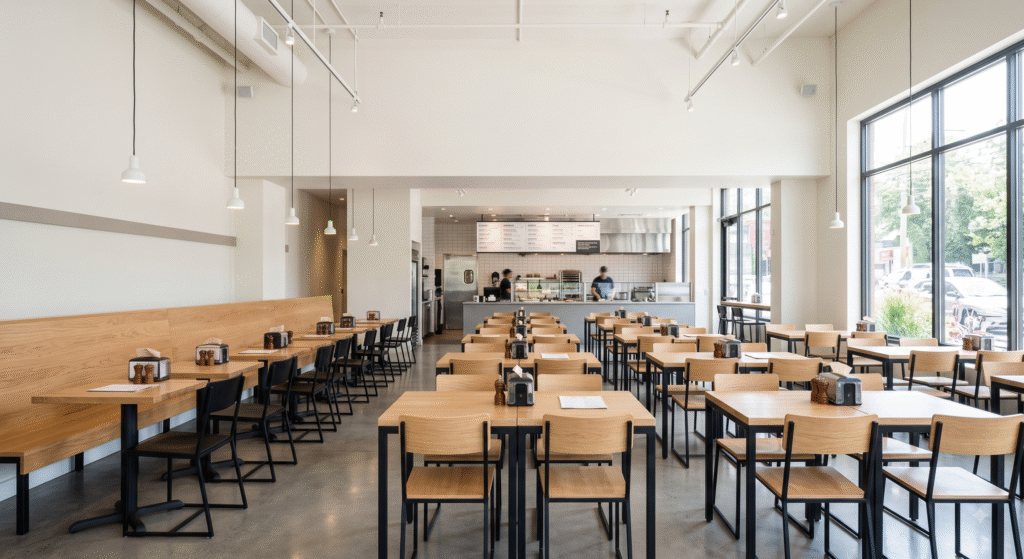
Hard seating, bright even lighting, tight table spacing, minimal soft furnishing. This isn’t a lack of design — it’s a design decision that keeps guests moving. Every extra minute someone lingers in a low-margin QSR seat is a cover you didn’t turn. Clean lines and functional materials (laminate, powder-coated steel, easy-wipe surfaces) also cut your maintenance and replacement cost over 3-5 years, which matters more here than in any other format.
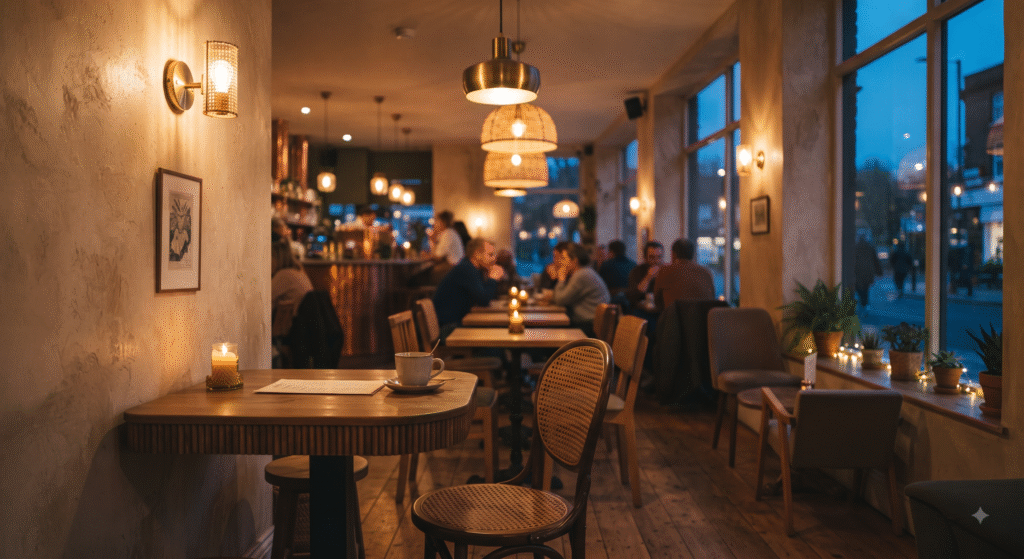
- Warm Destination Dining (casual dining, all-day cafes)
Layered lighting, mixed seating heights, textured materials — wood, cane, warm metals. The goal is the opposite of turnover speed: you want people to order a second coffee, a dessert, one more round. This theme earns its cost back through higher spend-per-cover and repeat visits, not through table velocity. It’s also the format where lighting temperature does the most commercial work — 2700K-3000K warm light reliably increases dwell time versus flat 4000K+ commercial lighting.
- Instagrammable Statement Zones (cafes, dessert bars, brunch spots)
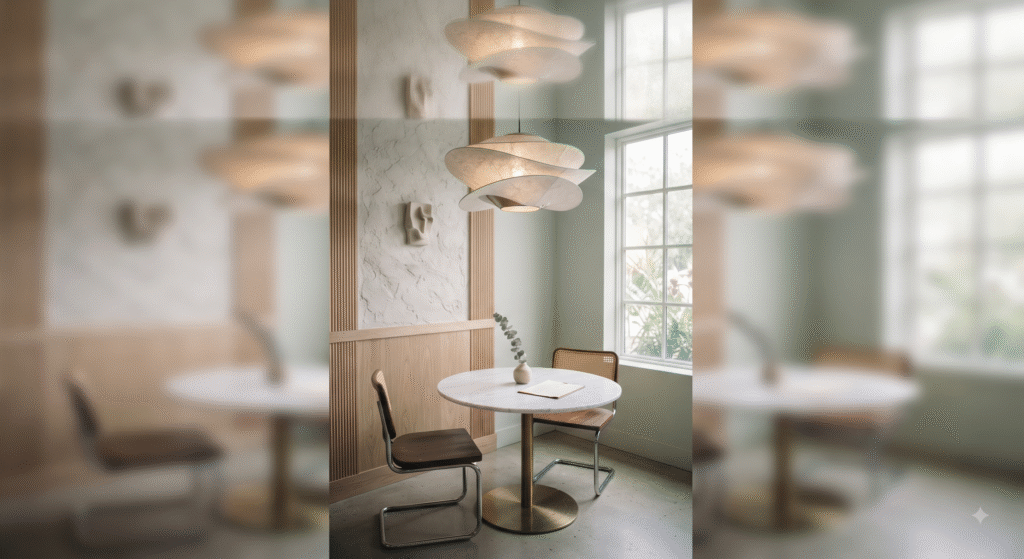
You don’t need to theme an entire restaurant for social content — you need one to two deliberate “moment” zones: a backdrop wall, a striking light fixture, a plating-friendly table by natural light. Done right, this is closer to a marketing spend than a decor spend — every tagged photo is free reach. Done wrong (theming the whole space for photos), you inflate build cost without inflating covers.
- Efficient Fine Dining (premium casual, fine dining)
Here the interior has to visually justify the price point before the food arrives — acoustic treatment for conversation-friendly noise levels, deliberate spacing between tables for privacy, higher-spec finishes concentrated at eye level and touchpoints (menus, chairs, tabletops) rather than spread thin everywhere. This is the theme where over-designing the back-of-house or low-visibility zones is pure margin loss.
THE COST QUESTION NOBODY ASKS UPFRONT
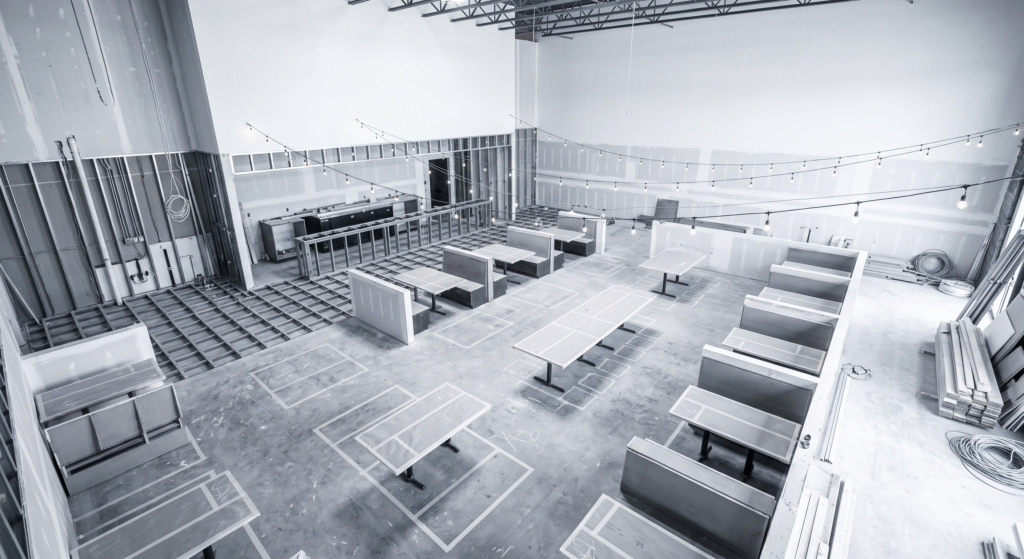
Homeowners plan interior budgets in lakhs per BHK. Restaurant owners should plan in cost per seat and cost per square foot of revenue-generating floor — not total spend. A ₹40L build that seats 80 covers efficiently often outperforms a ₹60L build that seats 55 covers beautifully. Ask any designer you’re evaluating to walk you through covers-per-sqft and projected turnover time before you talk finishes. If they can’t, that’s a red flag independent of how good their portfolio photos look.
THE FASTEST WAY TO GET THIS RIGHT
Most restaurant owners in Bangalore end up choosing a designer based on Instagram portfolio alone — which selects for photogenic spaces, not commercially efficient ones. This is exactly why Infrabob started onboarding commercial and F&B-focused interior designers alongside its residential roster — verified designers who can show you covers-per-sqft numbers and turnover data from past restaurant projects, not just render images. No commissions taken off your project cost, so the design brief stays focused on your P&L, not the designer’s margin.
If you’re planning a new outlet or a redesign, get the layout and theme right before you get the finishes right. The tiles can wait. The table plan can’t.
DM “RESTAURANT” on WhatsApp and we’ll connect you with 3 verified commercial interior designers who’ve actually built F&B spaces in Bangalore — free, no obligation.