

Here’s a conversation that plays out in almost every Bangalore living room during the possession months: one half of the family wants a clean, modern, minimal home. The other half wants a vastu compliant interior design with the kitchen in the south-east, the pooja room facing north-east, and absolutely no mirrors opposite the bed. Somewhere in between, the interior designer is trying to keep both sides happy without turning the flat into a maze of compromises.
The good news — you don’t actually have to choose. Vastu compliant interiors and modern design aren’t opposites. Most Vastu principles are really just old wisdom about light, ventilation, and energy flow, wrapped in tradition. Once you understand what each rule is actually solving for, it becomes far easier to design around it instead of fighting it.
Here’s a room-by-room breakdown that works for most Bangalore apartment layouts — and where you’ll likely need to make a practical trade-off, since builders rarely design flats with Vastu in mind.
THE ENTRANCE
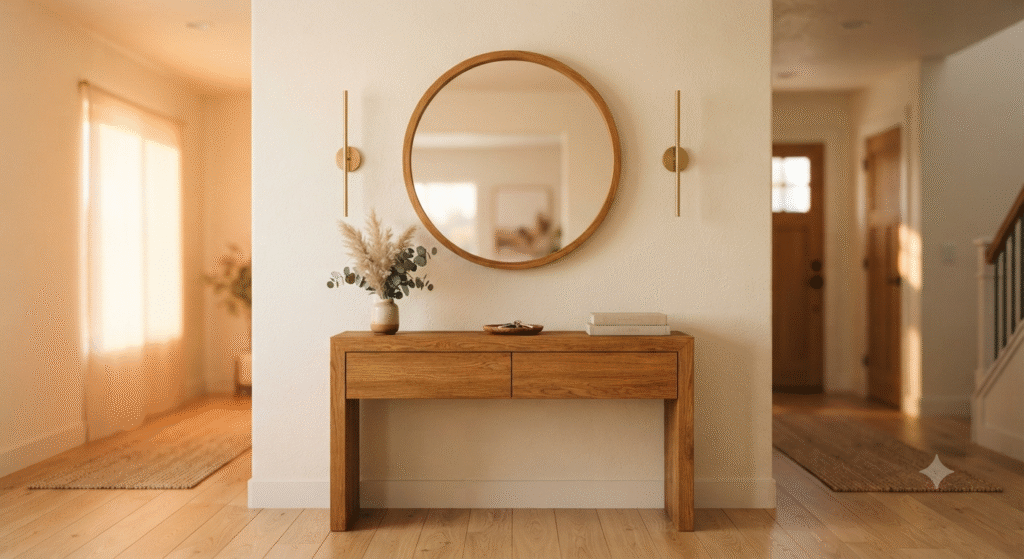
Vastu treats the main door as the entry point for energy, which in plain design terms means it’s the first impression of your home. North, north-east, or east-facing entrances are considered most favourable. If your flat’s door faces a different direction — which is common in apartment complexes — a well-lit, clutter-free entryway with a console table and warm lighting does more for “positive energy” than obsessing over the compass direction.
THE KITCHEN
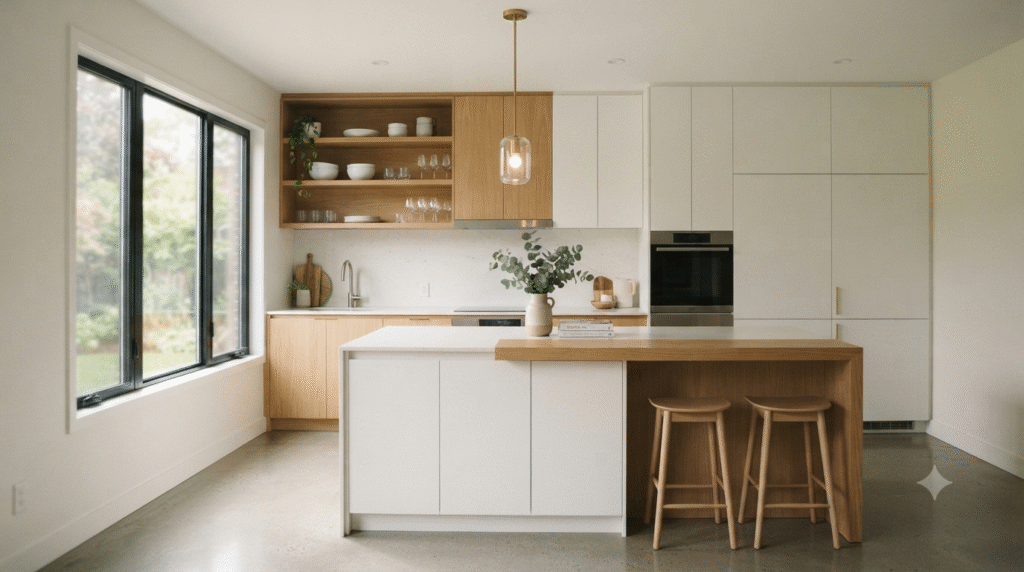
South-east is the traditional Vastu placement for the kitchen, governed by the fire element. In apartment living, you rarely get to choose this — the kitchen is fixed by the builder’s layout. What you can control is the stove position: ideally placed so the cook faces east while cooking, with the sink and stove not directly adjacent. This is a two-minute conversation with your designer during the modular kitchen planning stage.
THE MASTER BEDROOM
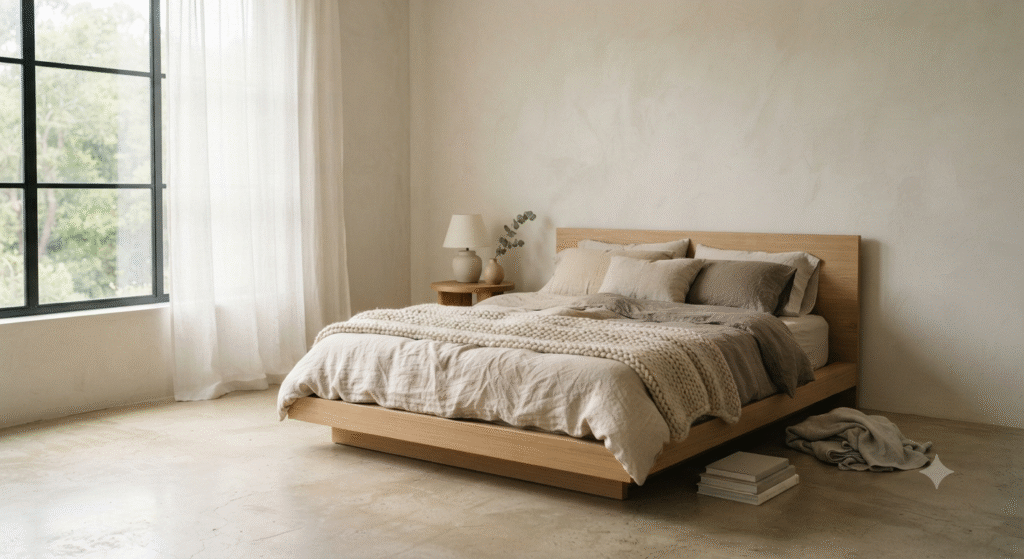
South-west is considered the most stable direction for the master bedroom, associated with grounding and rest. The more practical Vastu guidelines here are ones most designers already follow: avoid placing the bed directly under a beam, keep a mirror out of direct line of sight from the bed, and avoid sleeping with your head towards the north (this one has a scientific echo too — it’s tied to magnetic field orientation for better sleep).
THE POOJA ROOM
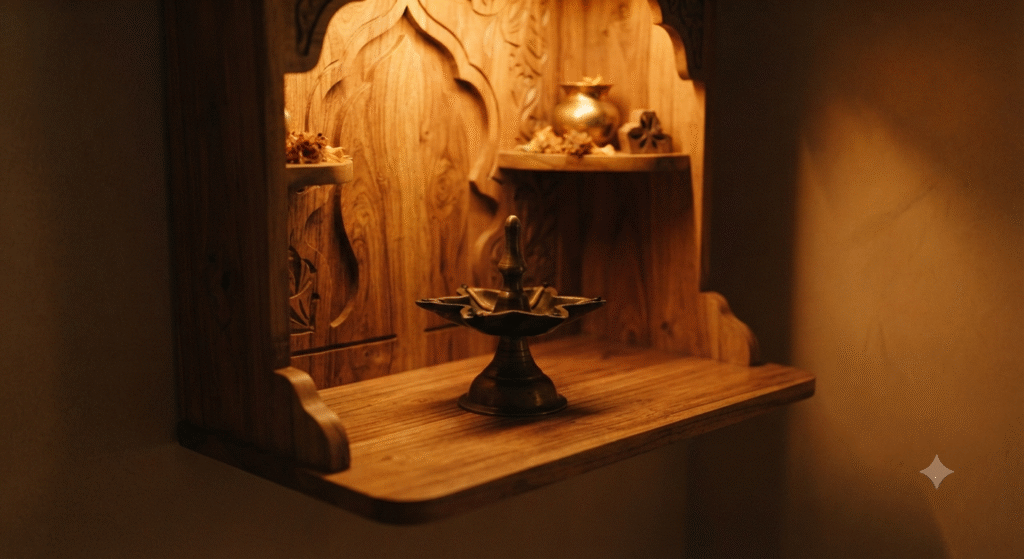
North-east is the standard recommendation, since it’s considered the most sacred zone in Vastu. If your flat doesn’t have a natural north-east nook, a compact pooja unit or wall-mounted shelf in that general zone works well — you don’t need an entire room dedicated to it, especially in a 2BHK where every square foot matters.
THE LIVING ROOM
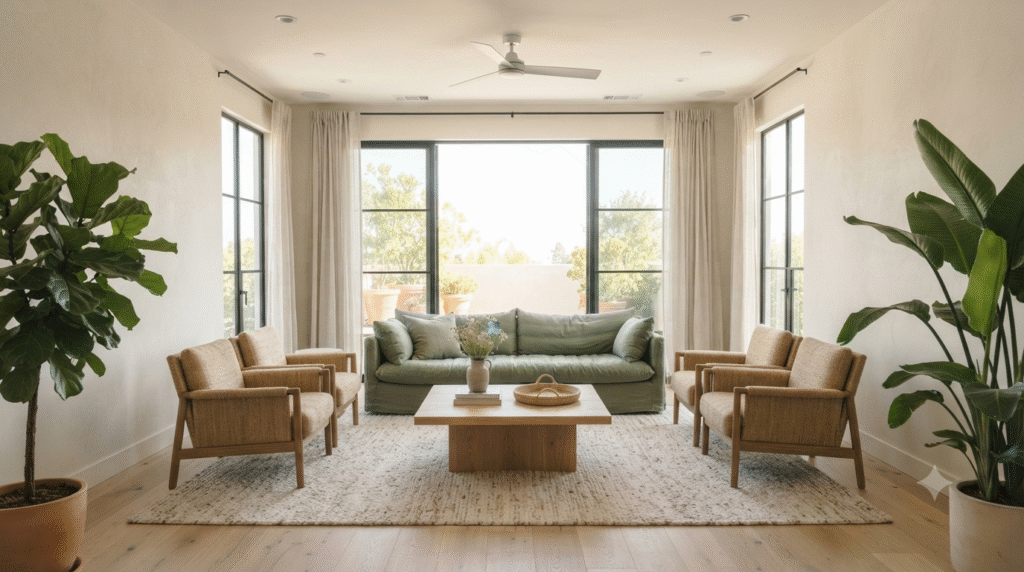
North or east-facing living rooms are preferred for natural light and guest energy. In practice, most Bangalore apartments already orient the living room towards the balcony for cross-ventilation, which tends to align reasonably well. Keep the seating arrangement facing the entrance rather than the back to it — a rule that’s as much about hospitality as it is about Vastu.
BATHROOMS
North-west is the preferred placement, since it’s seen as an “exit” zone. Builders fix this layout too, so your real lever is keeping the exhaust and plumbing well-maintained, and avoiding a bathroom directly attached to the pooja space if you have any say in the layout during a full renovation.
WHERE MODERN DESIGN AND VASTU ACTUALLY AGREE
Strip away the mysticism and most Vastu principles boil down to three things good designers already prioritise: natural light, uncluttered flow, and functional room placement. A north-east facing living room isn’t “auspicious” so much as it gets better morning light. A clutter-free entrance isn’t just about energy — it’s genuinely the first thing anyone notices when they walk in.
The real skill is in the details — knowing which Vastu principles are non-negotiable for a client’s family and which ones can flex based on the flat’s actual layout. This is exactly why a lot of homeowners on Infrabob specifically ask to be matched with designers who’ve handled Vastu-sensitive projects before — it saves weeks of back-and-forth once the design phase starts.
GETTING IT RIGHT WITHOUT OVERTHINKING IT
You don’t need to redesign your entire flat around Vastu, and you don’t need to ignore it either. Most homeowners land somewhere in the middle — non-negotiable on 3-4 things that matter to their family, flexible on the rest. Have that conversation with your designer before the layout is finalised, not after the modular kitchen is already fabricated.
If you’re heading into possession and want to be matched with verified designers who’ve actually worked with Vastu-sensitive families before, DM us “VASTU” on WhatsApp and we’ll send over a shortlist.