

4
TL;DR
Most Indian homes struggle with storage because bedrooms are compact and wardrobes are often poorly planned. The key to maximising space lies in smart wardrobe layouts—floor-to-ceiling units, sliding shutters, modular compartments, loft storage, and multifunctional accessories. When designed correctly, wardrobes can increase usable storage by 40–60% without increasing room size.
Why Space-Optimised Wardrobes Matter in Indian Homes
Indian homes—especially apartments in cities like Bangalore, Mumbai, and Delhi—often have bedrooms between 90–130 sq ft. Traditional wardrobes with hinged doors, shallow shelves, and wasted corners make these rooms feel cramped while still failing to store everything.
A well-designed wardrobe does more than just hold clothes. It needs to accommodate:
- Seasonal clothing (winterwear, ethnic wear)
- Sarees and lehengas
- Suitcases and travel bags
- Bedding and quilts
- Shoes and accessories
Without a thoughtful layout, wardrobes quickly become cluttered. Space-optimised wardrobes solve this problem by using vertical space, reducing door clearance, and organising storage zones efficiently.
Floor-to-Ceiling Wardrobes: The Most Underused Storage Trick


4
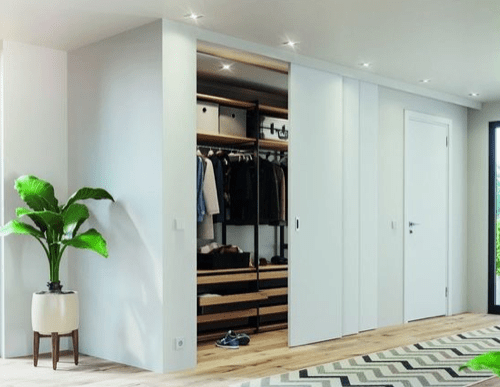
Most Indian wardrobes stop at 7 feet, leaving unused space between the wardrobe and ceiling. This area often collects dust or is covered with awkward plywood boxes.
A floor-to-ceiling wardrobe (up to 9–10 feet) solves this problem by creating additional storage zones.
Typical layout:
- Bottom section: daily wear clothing
- Middle section: shirts, trousers, sarees
- Top loft cabinets: suitcases, blankets, seasonal storage
This design can add 25–30% extra storage without occupying more floor space.
Pro tip: Use handle-less loft shutters so the wardrobe still looks clean and minimal.
Sliding Door Wardrobes for Compact Bedrooms


4
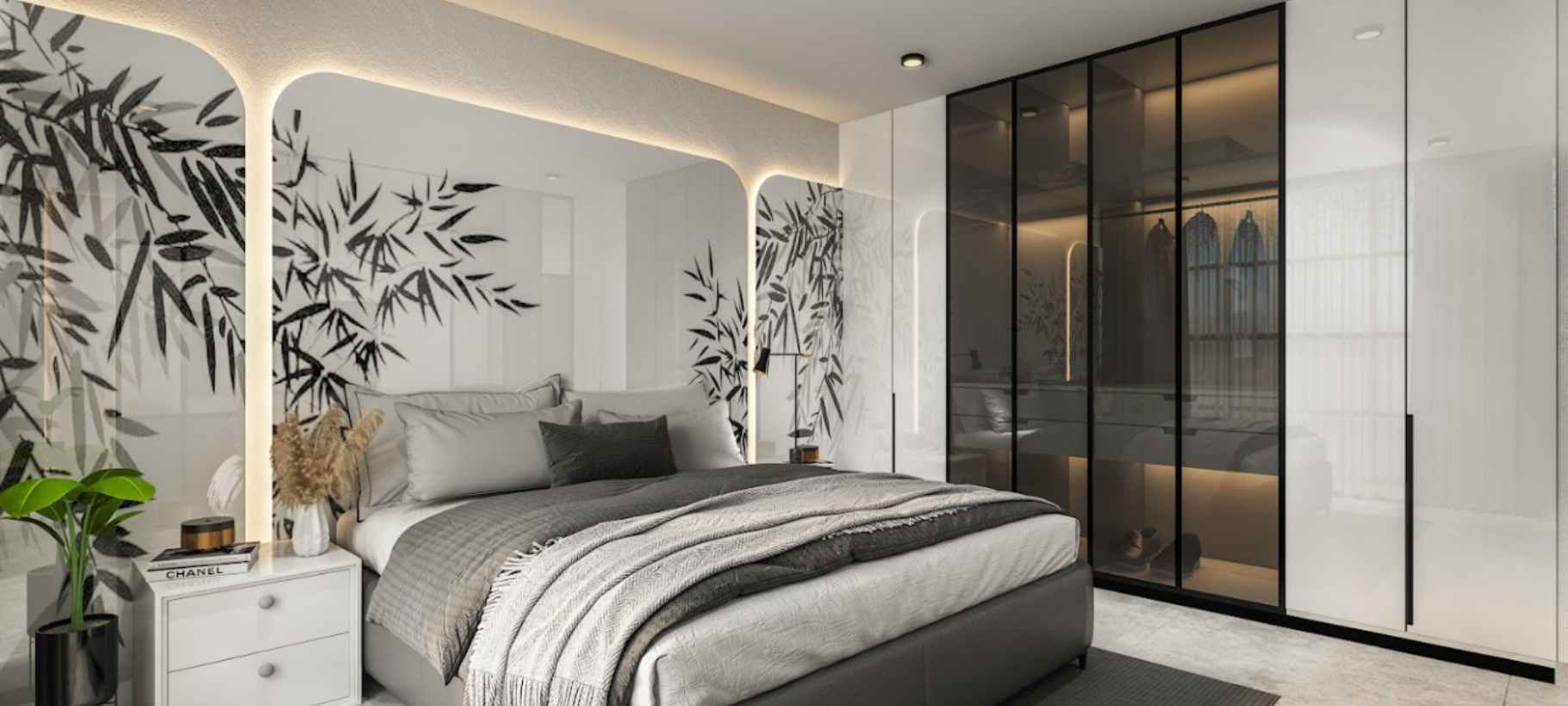
Hinged wardrobe doors require 2–3 feet of clearance to open properly. In small bedrooms, this space clashes with beds or side tables.
Sliding wardrobes eliminate this problem because the doors move sideways.
Advantages include:
- Saves up to 6 sq ft of usable space
- Works well in narrow bedrooms
- Allows larger wardrobe widths
- Provides a cleaner modern look
For Indian homes, 2-panel or 3-panel sliding wardrobes work best.
Popular finishes include:
- Mirror panels (makes room look larger)
- Matte laminates
- Glass with aluminium frames
Internal Wardrobe Layout That Actually Works

4
Most wardrobes fail not because of size, but because of poor internal planning.
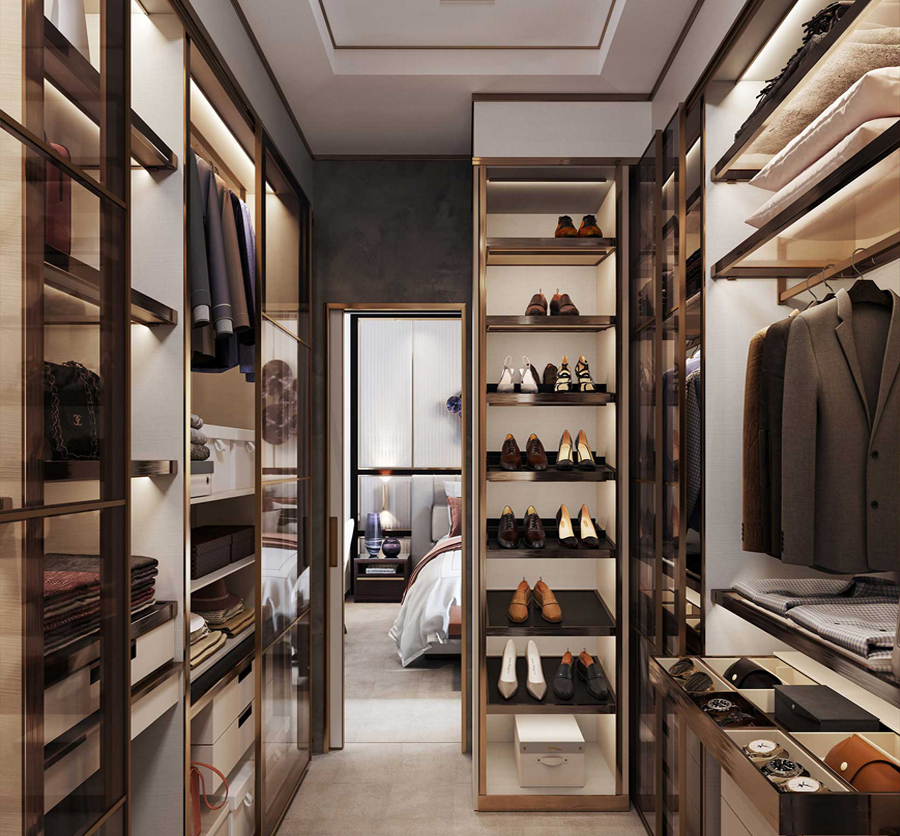
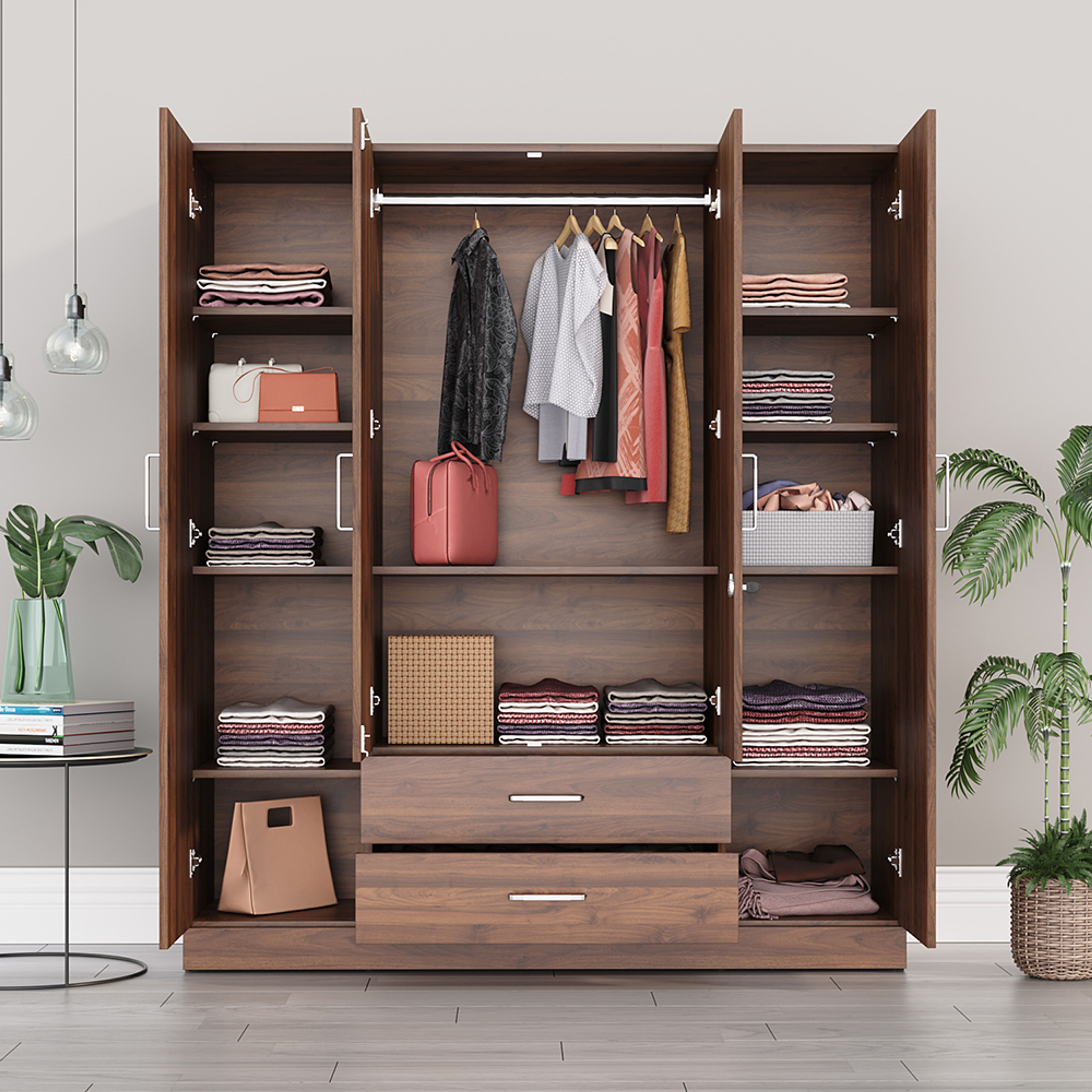
A good internal layout should divide the wardrobe into functional zones.
Recommended internal structure:
1. Double Hanging Section
- For shirts, kurtas, jackets
- Saves vertical space
2. Long Hanging Section
- Sarees, dresses, coats
3. Drawer Section
- Innerwear
- Accessories
- Watches and jewellery
4. Shelf Section
- Folded clothes
- Jeans
- Sweaters
A balanced wardrobe typically follows this ratio:
- 40% hanging space
- 35% shelves
- 25% drawers and accessories
This prevents overstacked shelves and messy wardrobes.
Corner Wardrobes for Awkward Bedroom Layouts

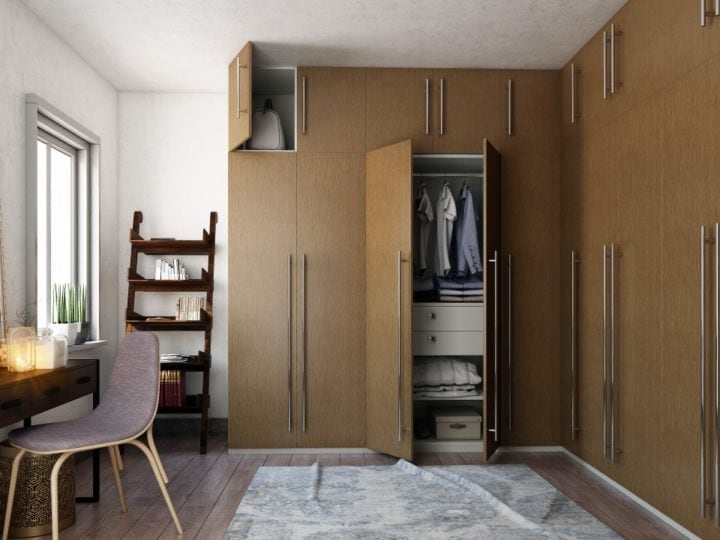
Indian bedrooms often have awkward corners due to windows or structural columns. These spaces are usually wasted.
A corner wardrobe (L-shaped layout) converts these dead zones into storage.
Benefits include:
- Uses previously unused corners
- Adds extra 10–15 sq ft of storage
- Works well in master bedrooms
- Allows separate storage zones for couples
To make corner wardrobes practical:
- Use rotating corner shelves
- Install pull-out baskets
- Avoid deep inaccessible shelves
Smart Accessories That Multiply Storage


4
Modern wardrobe accessories can increase usable storage dramatically.
Some of the most useful ones include:
Pull-out trouser racks
Keeps trousers wrinkle-free and easy to access.
Wardrobe lift hangers
Perfect for tall wardrobes where upper rods are difficult to reach.
Pull-out shoe racks
Prevents shoe clutter at the bottom of wardrobes.
Jewellery trays and divider drawers
Keeps small accessories organised.
These accessories may add 10–15% cost but improve daily usability significantly.
Materials That Make Wardrobes Durable in Indian Conditions
Indian homes deal with humidity, termites, and heavy daily usage, so material choice matters.
Best materials include:
- BWR plywood – durable and moisture resistant
- HDHMR boards – stable and strong for shutters
- Laminate finishes – scratch resistant
- Aluminium frame shutters – long lasting
Avoid cheap particle board wardrobes, especially for large units.
Common Wardrobe Design Mistakes in Indian Homes
Many wardrobes fail because of basic planning mistakes.
Common issues include:
- Too many shelves and not enough hanging space
- Wardrobes that stop below the ceiling
- Hinged doors in narrow bedrooms
- No dedicated storage for suitcases
- No drawer organisation
These mistakes make wardrobes look large but store less than expected.
Final Thoughts
In Indian homes, wardrobe design is not just about aesthetics—it’s about maximising every inch of storage.
The most efficient wardrobes combine:
- Floor-to-ceiling cabinets
- Sliding shutters
- Smart internal zoning
- Corner storage solutions
- Modular accessories
When done right, a wardrobe can store more, stay organised, and make even a small bedroom feel spacious.
Platforms like Infrabob help homeowners connect with verified interior designers and execution experts who understand how to design wardrobes specifically for Indian homes and apartment layouts.
Instead of generic designs, choosing the right professional ensures your wardrobe is tailored to your room size, lifestyle, and storage needs.