

When you walk into your first designer meeting, you’ll hear a lot of words: “maximalism,” “earthy tones,” “biophilic design,” “sustainable materials.” Some of it will stick. Most of it won’t. And that’s fine — until you realise, six months into your project, that you picked a trend that looked good on Instagram but feels wrong in your 2BHK in Whitefield.
This guide isn’t about following trends blindly. It’s about understanding what’s actually shifting in interior design in 2026, what makes sense for Bangalore homes, and most importantly — what questions to ask your designer about it.
TL;DR
- Warm minimalism is replacing stark white. Soft creams and natural wood are in; cold, clinical spaces are out.
- Biophilic design (bringing nature indoors through real materials, plants, light) is becoming standard.
- Maximalism is back, but curated — bold colour and pattern in ONE zone, restraint everywhere else.
- Sustainable materials aren’t just trendy; they last longer and often cost less over time.
- Personalised design beats templated design. Your home should look like YOU, not a showroom.
- Multi-functional spaces (one room doing many jobs) are the norm — smart zoning matters.
- Colour psychology is bolder: jewel tones and unexpected combos instead of safe pastels.
The real trend: Your designer matters infinitely more than which trends you pick. Find someone who can explain WHY a trend makes sense for your home (and when it doesn’t) instead of someone who just follows waves.
TREND 1: The Death of All-White Minimalism (Finally)
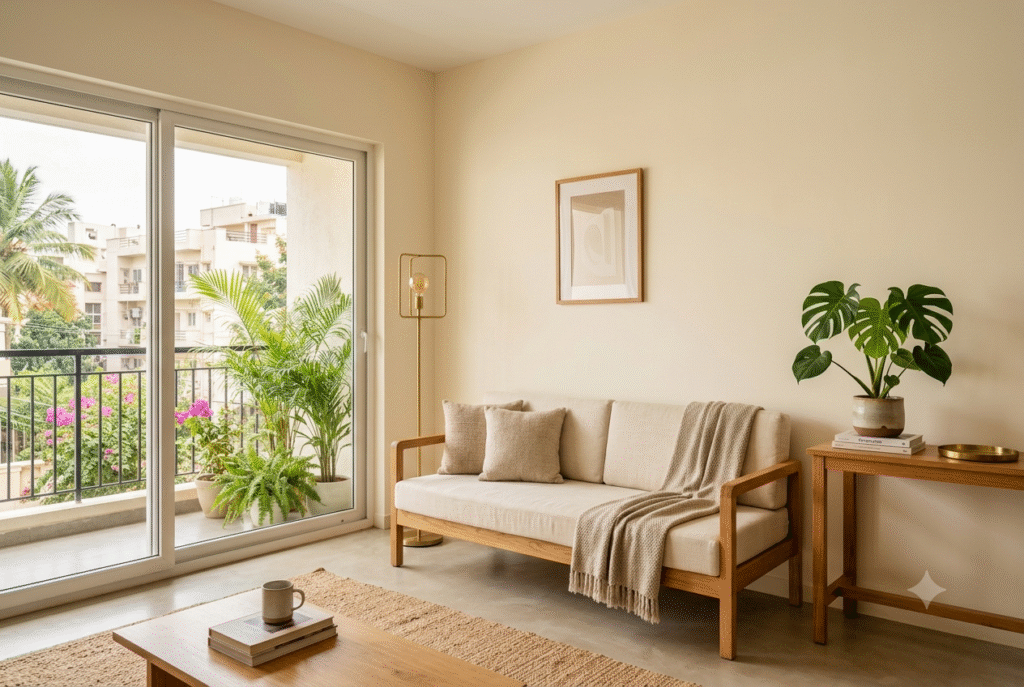
Remember 2022? Every Instagram home was white walls, Scandinavian furniture, and one potted plant in the corner. By 2024, that felt cold. By 2026, it’s officially dead.
What’s replacing it: Warm minimalism. Think soft creams, warm greys, stone textures, and natural wood. The idea is the same (less clutter, intentional choices), but the feeling is warmer, more lived-in.
Why it matters for Bangalore: Our climate is humid. White walls look dingy in Bangalore. Warm, off-white tones actually photograph better, age better, and feel less institutional in our flats.
Question to ask your designer: “Can we explore warm neutrals instead of stark white? What maintenance differences are there?” A good designer will immediately understand and show you swatches that work for humidity.
Red flag: If they push all-white without discussing your climate or lifestyle, they’re following 2022 playbooks, not 2026 thinking.
TREND 2: Biophilic Design (But Make It Real)
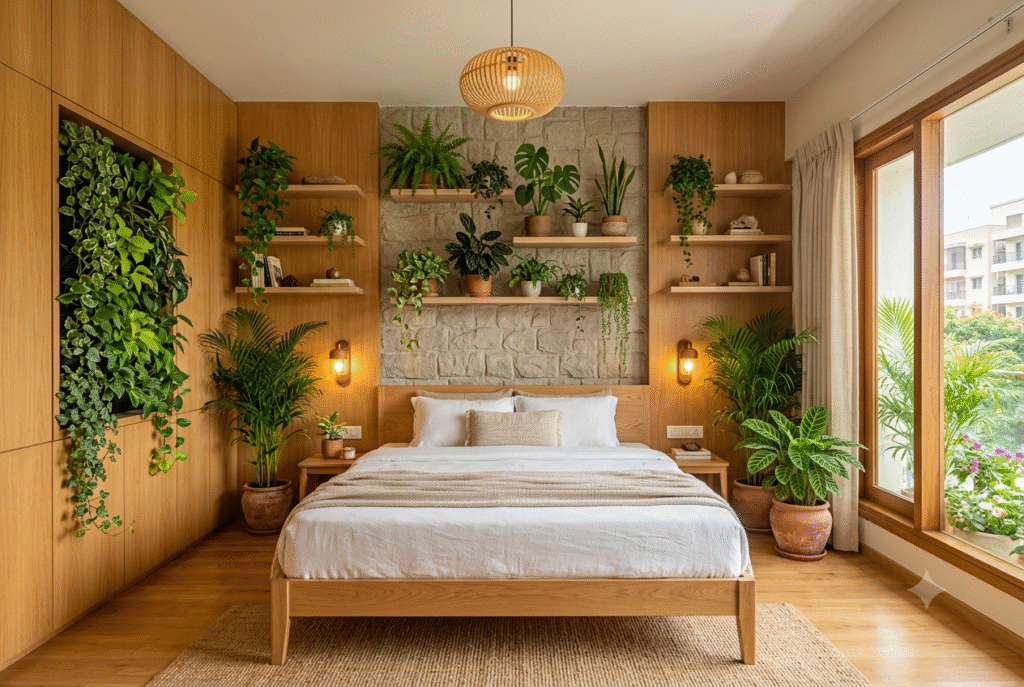
“Biophilic” sounds fancy. It just means: bringing nature indoors. Not as a vague Instagram aesthetic, but as an actual design principle.
In 2026, this means:
- Wood finishes that look natural, not varnished to death
- Plants that are actually integrated into the design (not afterthoughts)
- Stone, terracotta, and clay materials
- Water features (sometimes subtle — like a water wall, not a full fountain)
- Natural light maximisation
Why it matters for Bangalore: Our builders often give us concrete boxes with standard white paint. Biophilic design is the antidote. It makes a possession-stage flat feel like an actual home.
Question to ask your designer: “How will we bring natural materials into the main living areas without it looking like we tried too hard?” This separates designers who understand integration from those who just add a plant corner.
Red flag: If they suggest covering your walls in fake botanical wallpaper and calling it biophilic, they’re missing the point.
TREND 3: Maximalism (With Restraint)
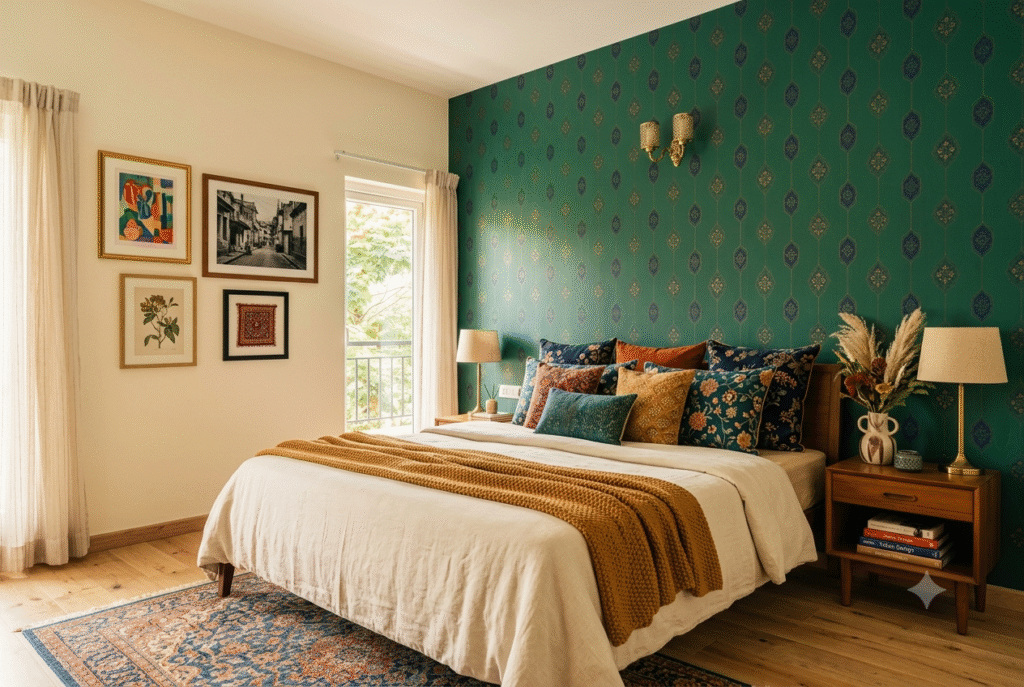
After years of “less is more,” some people are tired. Maximalism — the idea of layering patterns, colours, and textures — is back. But 2026 maximalism is not chaos.
The shift: It’s curated maximalism. Intentional clashing. A maximalist room still has a design logic; it just has more personality than a minimal one.
For a 2BHK in Bangalore, this usually means one maximalist zone (maybe your bedroom or a feature wall in the living room) and restrained neutrality everywhere else.
Why it matters: If you’re not the Instagram-aesthetic type, this trend is permission to actually decorate your home instead of just furnishing it.
Question to ask your designer: “If I want more colour and pattern, which room should we start with, and how do we make sure it doesn’t feel overwhelming?” The answer tells you if they understand proportion and balance.
Red flag: If they design a maximalist room that looks like Pinterest threw up, they don’t understand restraint.
TREND 4: Sustainable Materials (Beyond the Greenwashing)
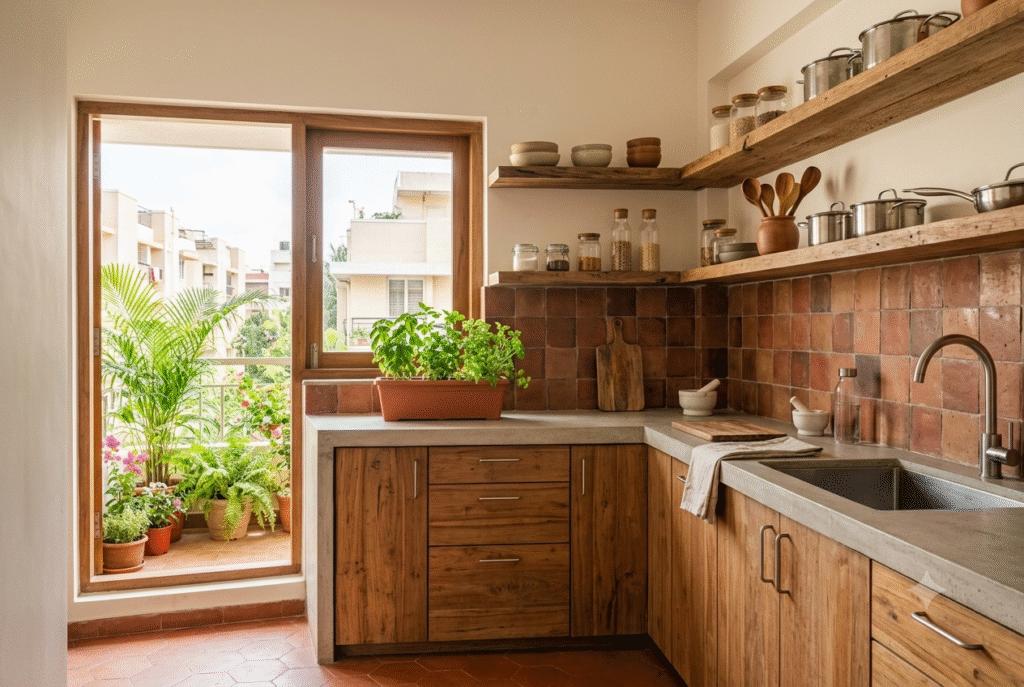
“Eco-friendly” used to mean a few bamboo shelves and a sad indoor plant. In 2026, it’s becoming structural.
What’s actually shifting:
- Reclaimed wood becoming mainstream (not boutique)
- Low-VOC paints and finishes (better for your health, not just the planet)
- Upcycled materials in statement pieces
- Locally sourced materials (good for cost, carbon footprint, and supporting local craftspeople)
- Better durability (buying something that lasts 20 years is more sustainable than buying fast furniture every 3 years)
Why it matters for Bangalore: Material costs are high. Sustainable materials often cost more upfront but last longer, saving money in the long run. Also, Bangalore has excellent local craftspeople and suppliers — leveraging that is both sustainable and economical.
Question to ask your designer: “What percentage of materials will be locally sourced or sustainably produced? And more importantly, why are those choices better for durability?” If they fumble this, they’re not thinking beyond the trend.
Red flag: If they charge extra for “eco-friendly” materials without explaining the durability or cost-benefit, they’re greenwashing.
TREND 5: Personalised, Not Templated Design
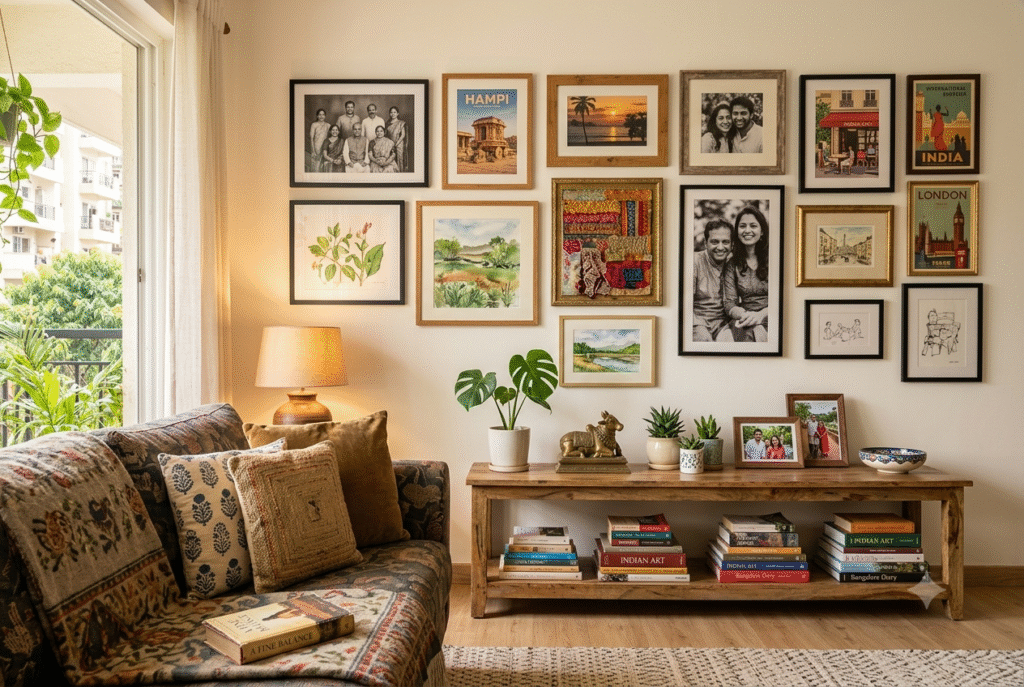
This is less about aesthetics and more about philosophy. In 2026, the design trend is: your home should look like YOU, not like a showroom.
This means:
- Custom pieces over off-the-shelf furniture
- Displaying your art, books, collections (not hiding them)
- Mixing high and low — expensive statement pieces paired with affordable basics
- Spaces that tell your story
Why it matters: Templates are boring. Also, they’re often expensive. A personalised design that reflects your actual life will cost less and feel better.
Question to ask your designer: “Walk me through how you’ll make sure this design reflects MY lifestyle, not just a trend.” If they can’t articulate this, they’re designing from a mood board, not from understanding you.
Red flag: If all their portfolios look the same (just different colour schemes), they’re templating.
TREND 6: Multi-Functional Spaces (Necessity Became Design)
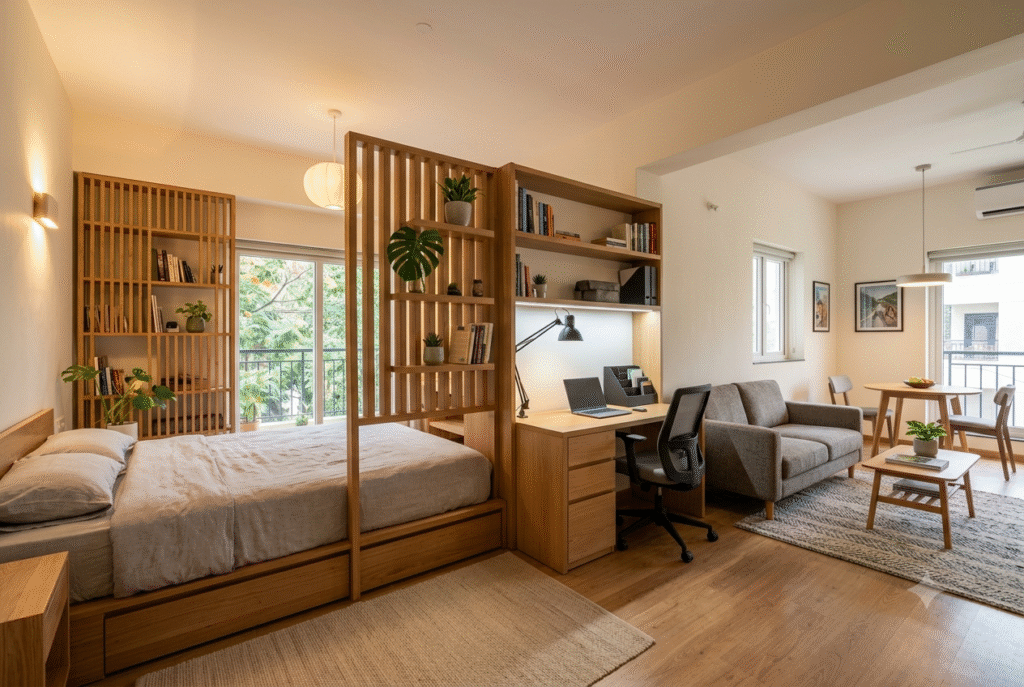
Post-pandemic, the shift from “separate rooms for separate functions” to “one room for work, sleep, relaxation, and eating” isn’t going away.
In 2026, this means designers are getting smarter about multi-functional design:
- Storage that doubles as room dividers
- Desks that fold away or convert to dining
- Lighting that changes based on activity (work lighting vs. relaxation lighting)
- Zones within one room that feel distinct but not cramped
Why it matters for Bangalore: Most of us are buying 2BHKs and 3BHKs where one room is doing triple duty. Smart multi-functional design is not a trend; it’s a necessity.
Question to ask your designer: “How will you zone this room so it doesn’t feel chaotic when it’s being used for multiple things?” This is where mediocre designers fail and great ones shine.
Red flag: If they suggest blocking off a corner with a curtain and calling it “creative zoning,” they’re not thinking this through.
TREND 7: Colour Psychology Moves Beyond Calming Pastels
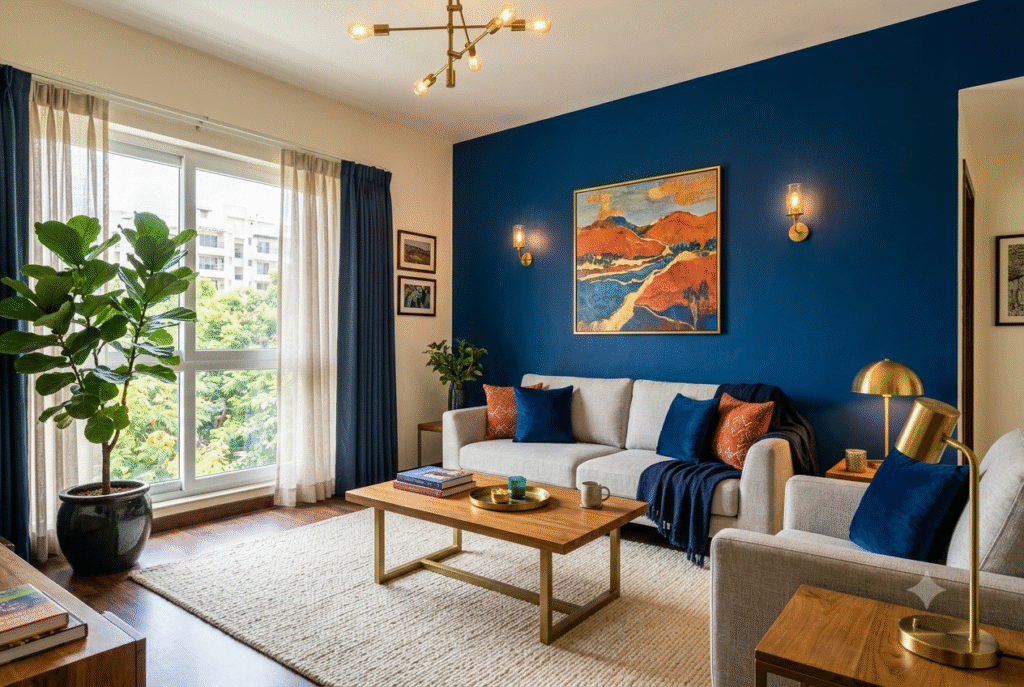
In 2025, every trending colour was sage green or dusty blue. In 2026, designers are getting bolder and more intentional about colour.
What’s shifting:
- Deeper, richer jewel tones (emerald, sapphire, deep terracotta)
- Colour used strategically in one area, not watered down across the whole home
- Accent walls are back, but done differently — sometimes as full feature walls with texture, not just paint
- Colour combos that seem clashing but actually work (like deep navy with burnt orange)
Why it matters: Colour is free. It’s the easiest way to make a space feel more expensive and more yours.
Question to ask your designer: “What’s your approach to colour in this design? Are we going bold anywhere?” If they default to beige + accent wall, they’re not thinking in 2026.
Red flag: If they suggest taupe and white because “it’s safer,” they’re underestimating your home’s potential.
WHAT NOT TO DO IN 2026
Oversaturate with trends. If you’re following all seven of these at once, your home will feel incoherent. Pick 2-3 that resonate with your lifestyle and let your designer weave them in.
Confuse trend with timeless. Trends are waves. The design choices that’ll age well are the ones rooted in your actual taste and lifestyle, not Instagram’s algorithm. A personalised, locally-rooted design with one or two thoughtful trends baked in will age better than a design that’s 100% trend-chasing.
Ignore your climate. This is specific to Bangalore: dark colours in humid weather, white walls in dust-prone areas, and delicate finishes in homes where moisture is constant — these choices look good on Instagram and feel bad in reality.
THE REAL TREND: DESIGNER SELECTION MATTERS MORE THAN DESIGN TRENDS
Here’s what we’ve learned from working with 150+ homeowners and 80+ designers in Bangalore:
The homeowners who are happiest with their designs aren’t necessarily the ones who followed every 2026 trend. They’re the ones who:
- Found a designer who understood their lifestyle (not just their Pinterest board)
- Asked hard questions about material durability, local sourcing, and cost-benefit
- Trusted the designer’s expertise while staying true to their own taste
- Had a written scope of work that was clear on which trends were actually being incorporated
The designer you pick matters infinitely more than the trends you pick. A mediocre designer with 2026 trends will give you a dated, incoherent space in 18 months. A good designer who understands these shifts will create something that feels current, functional, and personal.
YOUR NEXT STEP
When you sit down with an interior designer, use these trends as a conversation starter, not a checklist. Ask them:
“Which of these shifts do you see in Bangalore homes right now?”
“Which of these make sense for my specific situation?”
“How do we weave one or two of these in without making the space feel trendy?”
If they can articulate why a trend matters and when it doesn’t, you’ve found someone who’s thinking critically, not just following waves.
If they can’t, you’re not ready to hire them yet.
The best interior design in 2026 isn’t about following trends. It’s about understanding your home, your climate, your lifestyle, and your taste — and then using design wisdom (and maybe one thoughtful trend) to create a space that’s unmistakably yours.
That’s worth the effort of finding the right designer.
Ready to find a designer who thinks this way? On Infrabob, every designer we match you with has been vetted on their ability to understand YOUR home, not just the latest trend.
Get matched free today. DM us “DESIGN” or visit infrabob.com.