

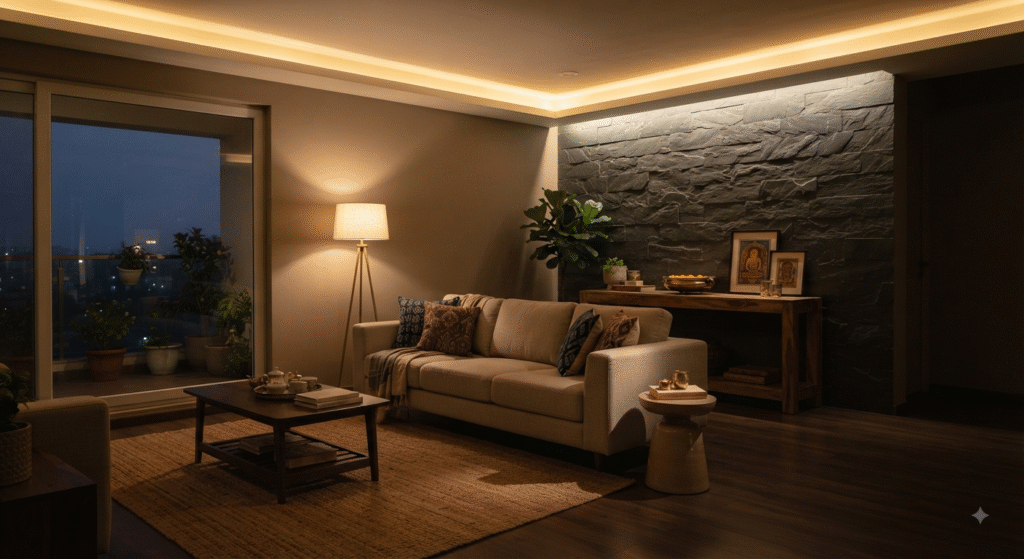
Why Your Home Feels “Off” Even After a Full Interior Makeover
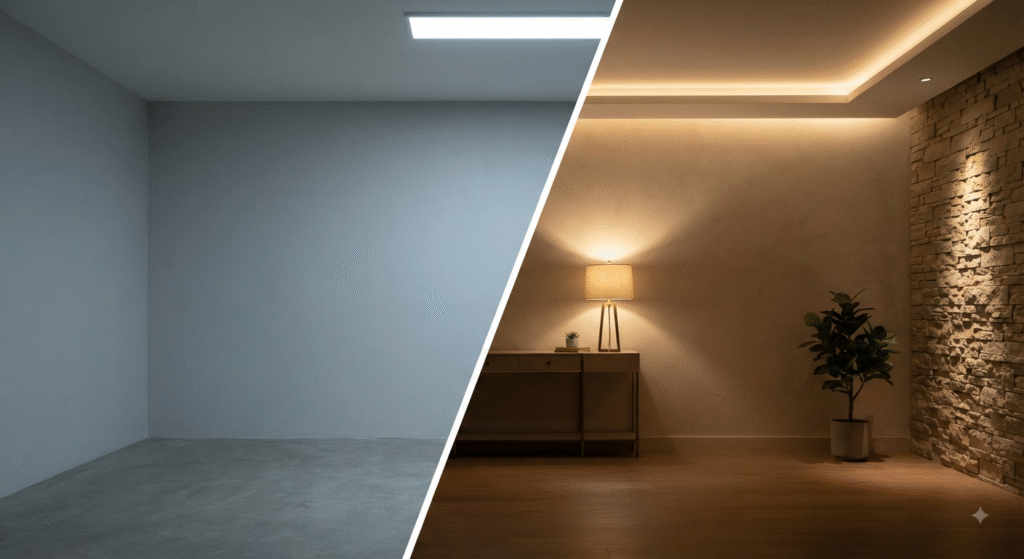
You picked the furniture. You chose the tiles. The paint is exactly the shade you wanted. And yet, something about the space still feels flat, or worse, like a badly lit showroom. Nine times out of ten, the culprit is lighting — or more specifically, the absence of layered lighting.
Most Bangalore flats come with one ceiling light per room. One switch, one brightness level, one mood, all day, every day. That single light source is the single biggest reason homes look unfinished even after significant money has gone into the interiors. Good interior lighting design isn’t about buying expensive fixtures. It’s about layering three distinct types of light so a room can shift from bright and functional in the morning to warm and relaxed at night, without you touching a single piece of furniture.
This guide breaks down the three lighting layers for interior lighting design, how to combine them room by room, and the mistakes that quietly cost homeowners the most in wasted electrical work.
The Three Layers of Lighting
- Ambient Lighting (the base layer)
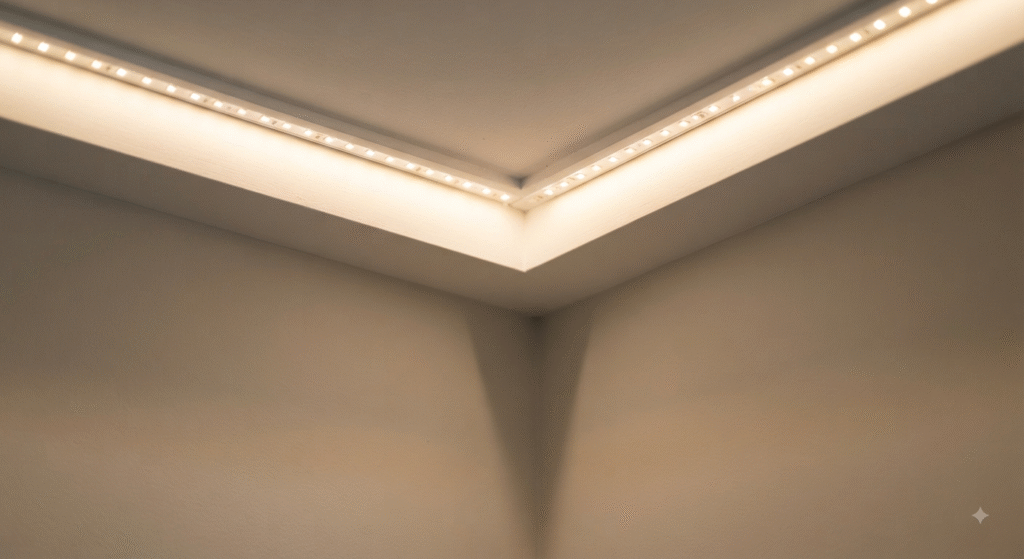
Ambient light is the general, even illumination that lets you move through a room and see clearly. This is usually your ceiling-mounted fixtures — cove lighting, false ceiling downlights, or a central pendant. Its job is coverage, not drama. If ambient lighting is the only layer in your home, the room will look flat and clinical no matter how good the furniture is.
- Task Lighting (the functional layer)
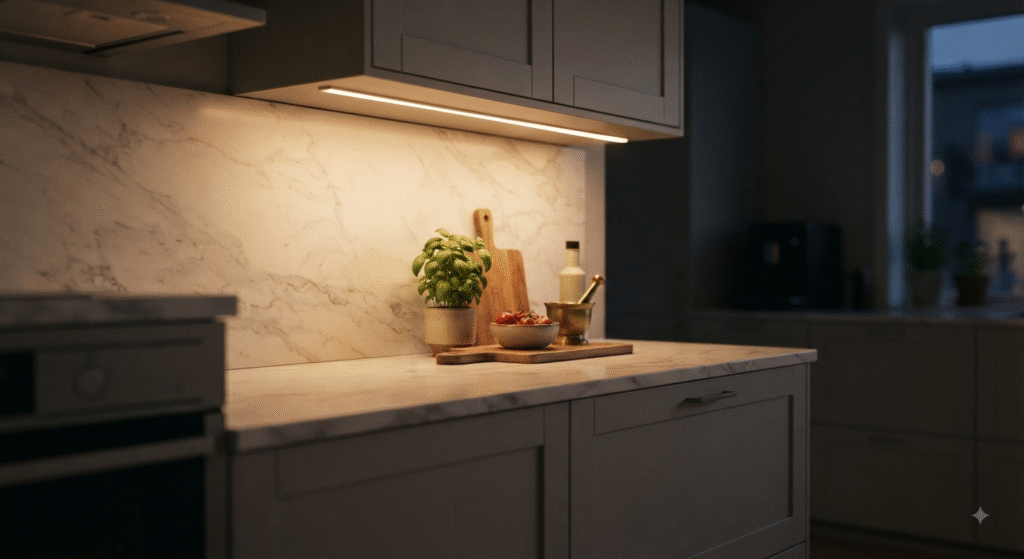
Task lighting is focused light for a specific activity — reading, cooking, working, applying makeup, checking your reflection before you leave the house. Under-cabinet lights in a modular kitchen, a desk lamp in a study nook, a wall light beside the bed for reading — these all fall under task lighting. Without it, people end up relying on harsh ambient light for close-up work, which strains the eyes and still doesn’t light the task area properly.
- Accent Lighting (the character layer)
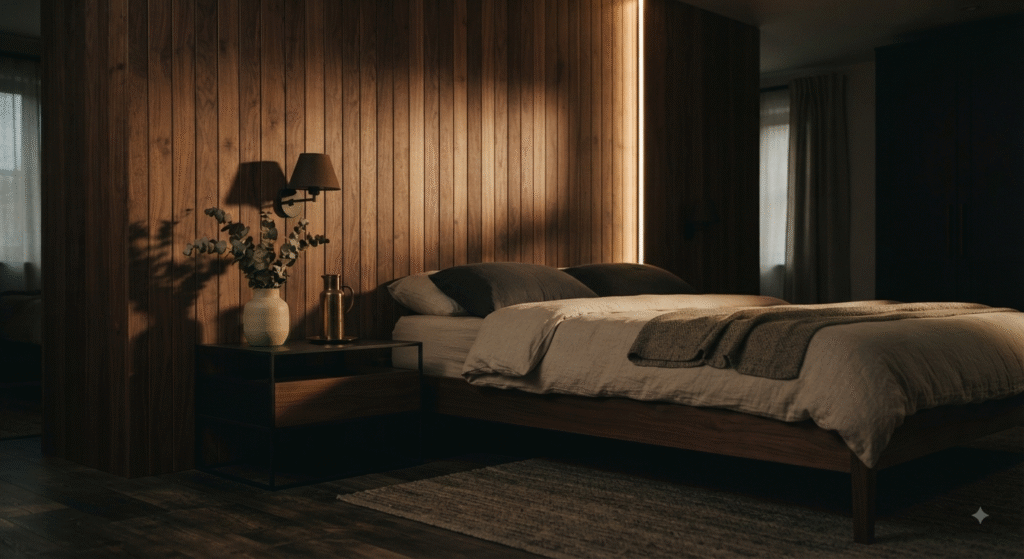
Accent lighting is what actually gives a home its mood. It highlights a feature wall, a piece of art, a plant, an alcove, or architectural detailing. This is usually wall washers, spotlights, or LED strips tucked into a niche. Accent lighting is the layer most Bangalore homes skip entirely, and it’s also the one that makes the biggest visual difference for the smallest cost.
How to Layer Lighting Room by Room
Living Room
Start with ambient cove or downlight for general coverage, keep it on a dimmer. Add a floor lamp or table lamp near the seating for a softer task/ambient hybrid in the evenings. Finish with a wall washer or spotlight on your TV unit, art piece, or feature wall to add depth once the main lights are dimmed.
Kitchen
Ambient ceiling lights handle general visibility, but the real work happens with task lighting — LED strips under the cabinets, directly above the counter and hob. Skipping this is the single most common Bangalore kitchen mistake; without it, you end up cooking in your own shadow.
Bedroom
Keep ambient lighting soft and warm, not the same brightness as your living room. Add task lighting on either side of the bed — wall-mounted or pendant, angled for reading without disturbing a partner. A single accent light behind the headboard panel or on a wardrobe shutter adds a hotel-room quality without much extra cost.
Bathroom
Ambient ceiling light for general use, task lighting around the mirror (ideally on both sides of the face, not just above, to avoid harsh shadows), and if there’s a niche or textured tile wall, a subtle accent strip finishes the look.
Common Mistakes That Cost Homeowners the Most
The biggest one is retrofitting. Lighting is an electrical layout decision, which means it has to be planned before false ceiling work and wiring are finalised, not after. Homeowners who decide on accent lighting after the false ceiling is done end up paying for additional conduit work, patch-ups, and sometimes redoing sections of the ceiling entirely.
The second mistake is using the same colour temperature everywhere. Cool white (5000K–6500K) in a living room reads clinical and unwelcoming. Warm white (2700K–3000K) is what most Indian homes actually want for ambient and accent layers, with cooler tones reserved for kitchens and work areas where alertness matters more than mood.
The third is skipping dimmers on ambient circuits. A dimmer costs a fraction of the electrical budget but is what actually lets one room serve multiple moods across the day.
Budgeting for Layered Lighting in Bangalore
For a standard 2BHK, layered lighting (ambient plus task plus a reasonable amount of accent work) typically adds a modest percentage to the electrical and false ceiling budget compared to a single-layer setup — the increase comes mostly from additional wiring points and LED strip material, not the fixtures themselves. It’s a line item worth discussing explicitly with your designer at the concept stage, not after the false ceiling drawing is finalised.
This is exactly the kind of detail that separates a designer who’s thought through the electrical layout from one who’s just filling a floor plan. On Infrabob, every verified designer is expected to walk homeowners through lighting layers at the concept stage, precisely so this doesn’t become a change order three weeks into execution.
Getting lighting right doesn’t need a bigger budget. It needs the three layers planned before the ceiling closes, not after.